Persian Carpet Designs Explained: Toranj, Herati, Boteh and More
Persian carpet design names are one of the most useful vocabularies a buyer can learn. Once you know that a toranj is a medallion and a herati is a repeating flower-and-leaf pattern, a showroom full of carpets stops looking like a wall of pattern and starts to sort itself into families.
This guide covers the design terms you will meet most often, what to look for in each, and one important caution: a design name describes what you see. It does not, on its own, tell you where the carpet was woven.
Start with what you can see
Before reaching for a traditional name, describe the carpet plainly. Is there one dominant centre, or does the pattern spread evenly across the whole surface? Is the field divided into compartments? How wide is the border, and how does it frame the field? The traditional names are shorthand for exactly these observations.
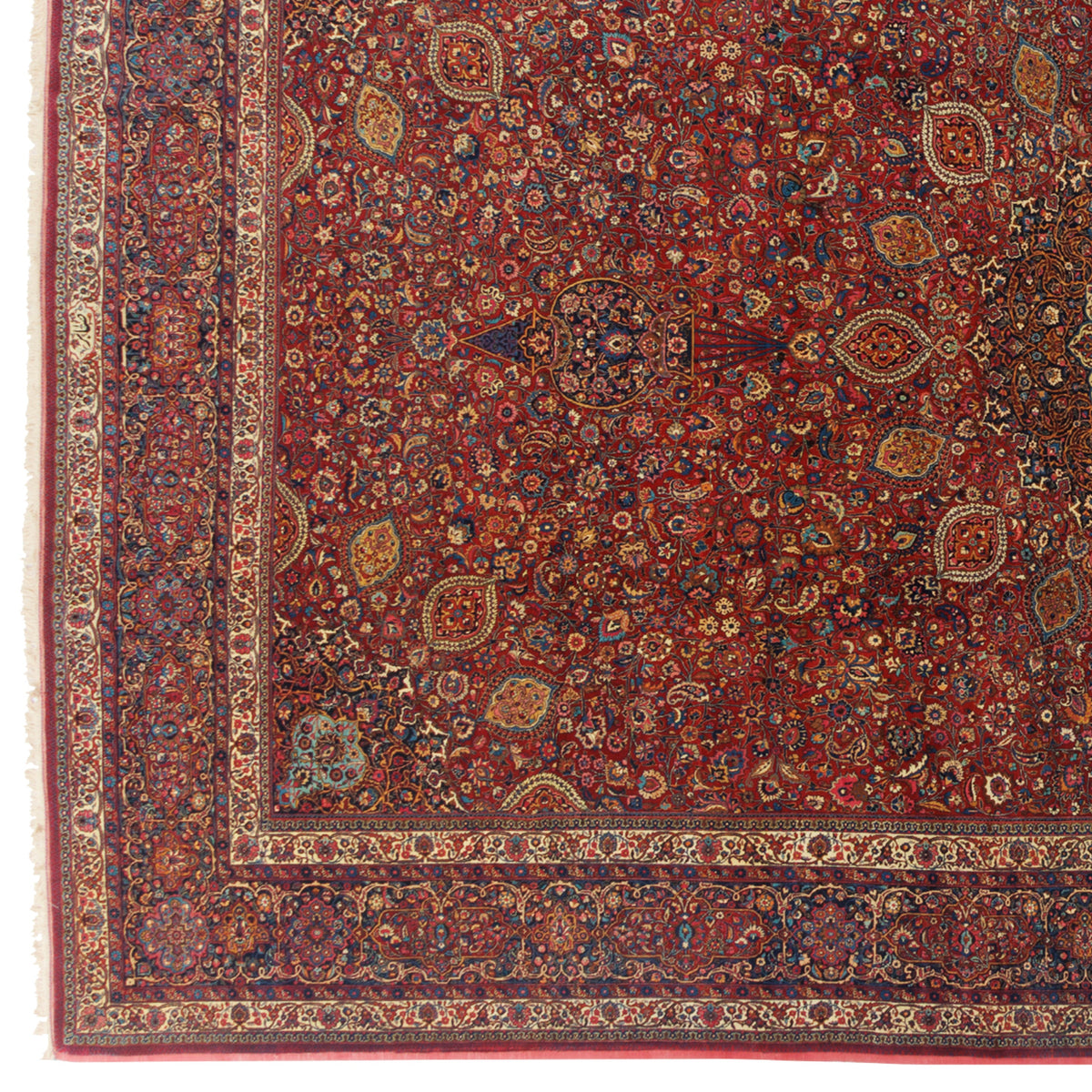
Two words appear in almost every description. The matn is the main field, and the hasheh is the decorative border that surrounds it. Most of the names below describe what happens in the matn.
The main Persian design names
| Design name | What to look for |
|---|---|
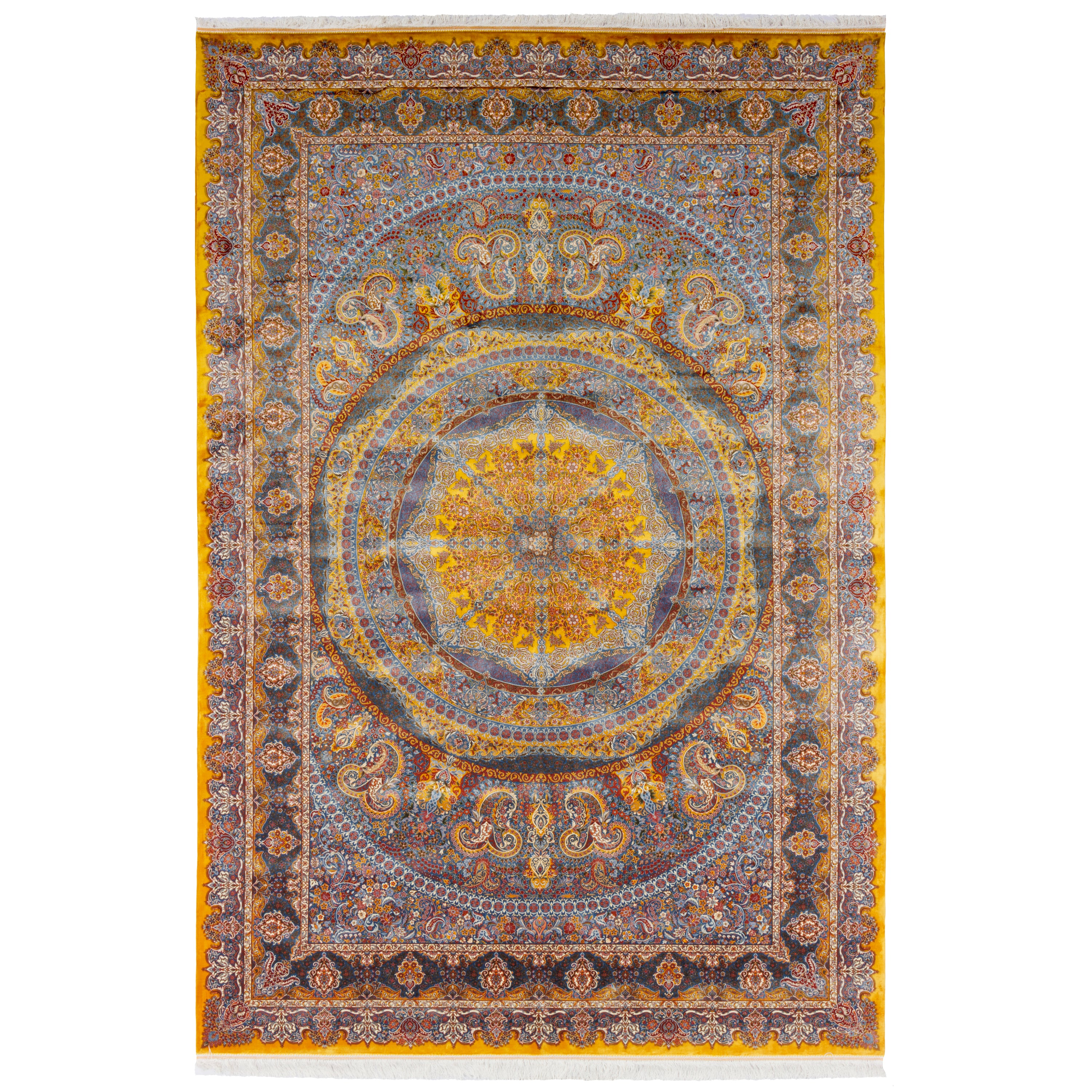
| Toranj | A central medallion that anchors the composition. |
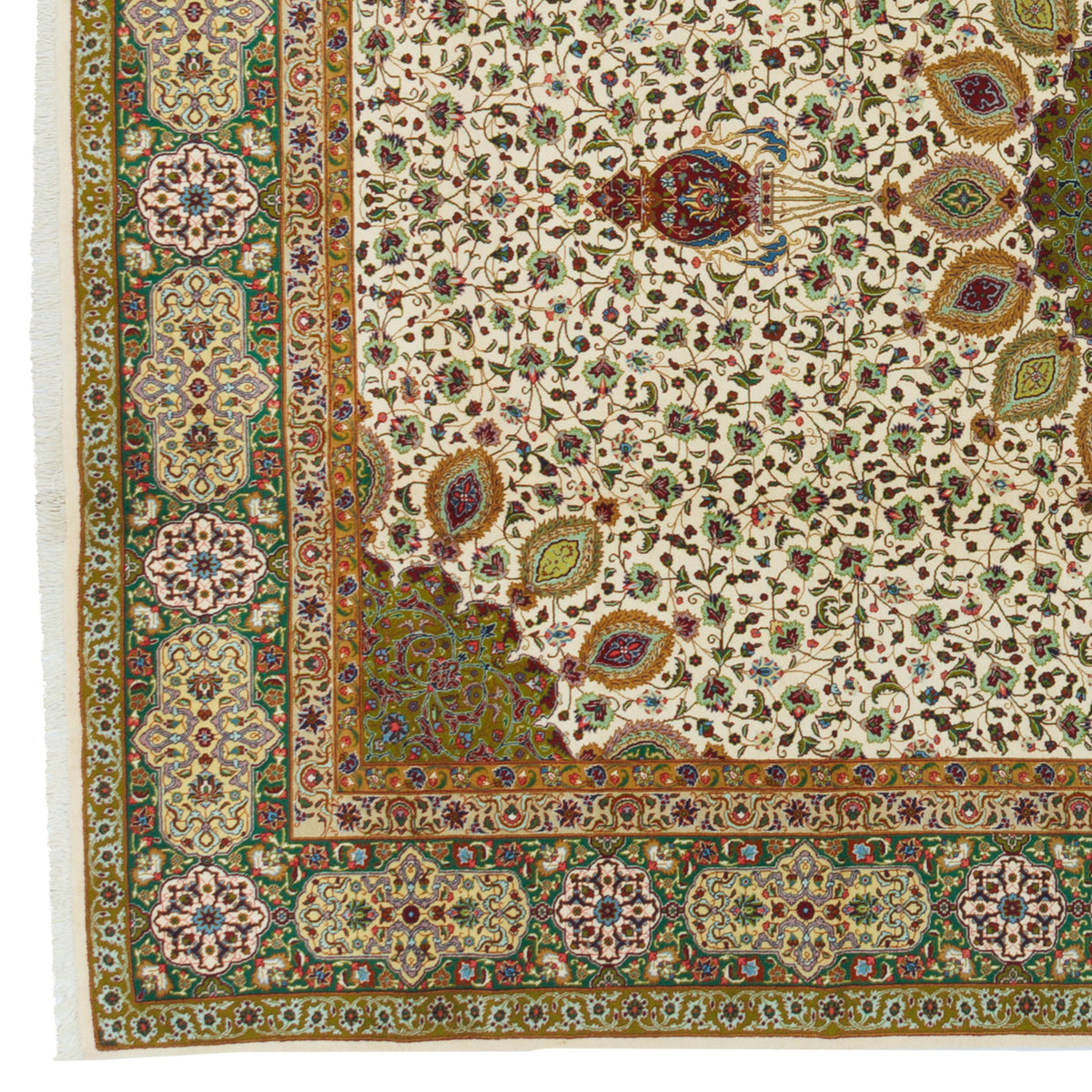
| Lachak toranj | A central medallion with related corner pieces (lachak) echoing it in each corner of the field. |
| Afshan or sarasar | An all-over treatment: the pattern spreads across the whole field without a single dominant medallion. We use the two names in the same sense; other traders may draw a distinction. |
| Eslimi | Flowing, curling arabesque forms, often interlacing through the field. |
| Shah Abbasi | Stylised floral and palmette motifs, frequently combined with eslimi scrolls. |
| Herati or mahi | A repeated composition, commonly a flower framed by curved leaf forms. Mahi means fish, after the shape of the leaves. |
| Boteh | A curved, tapering motif often compared with the paisley shape. |
| Kheshti | A field divided into panels or compartments, each holding its own motif. |
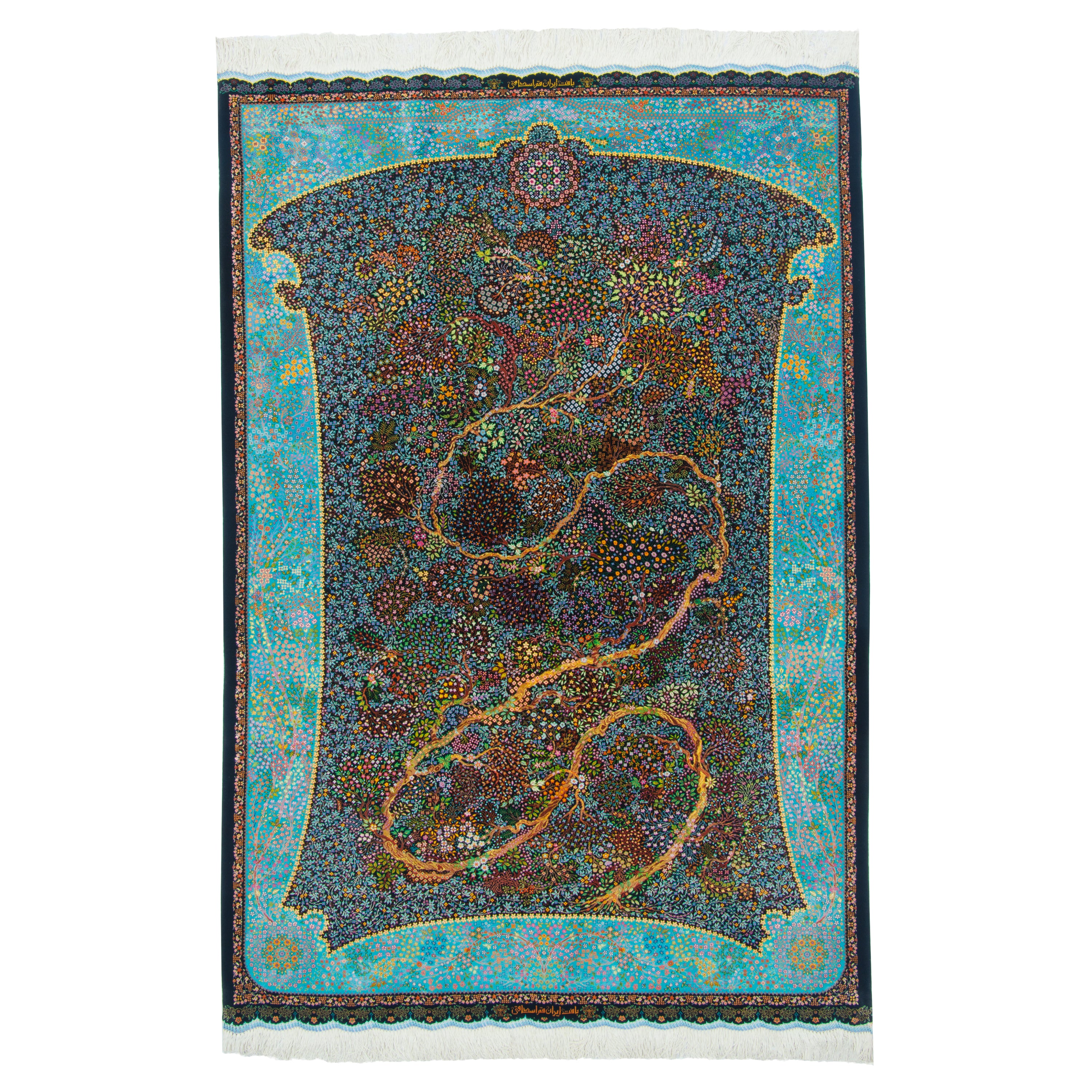
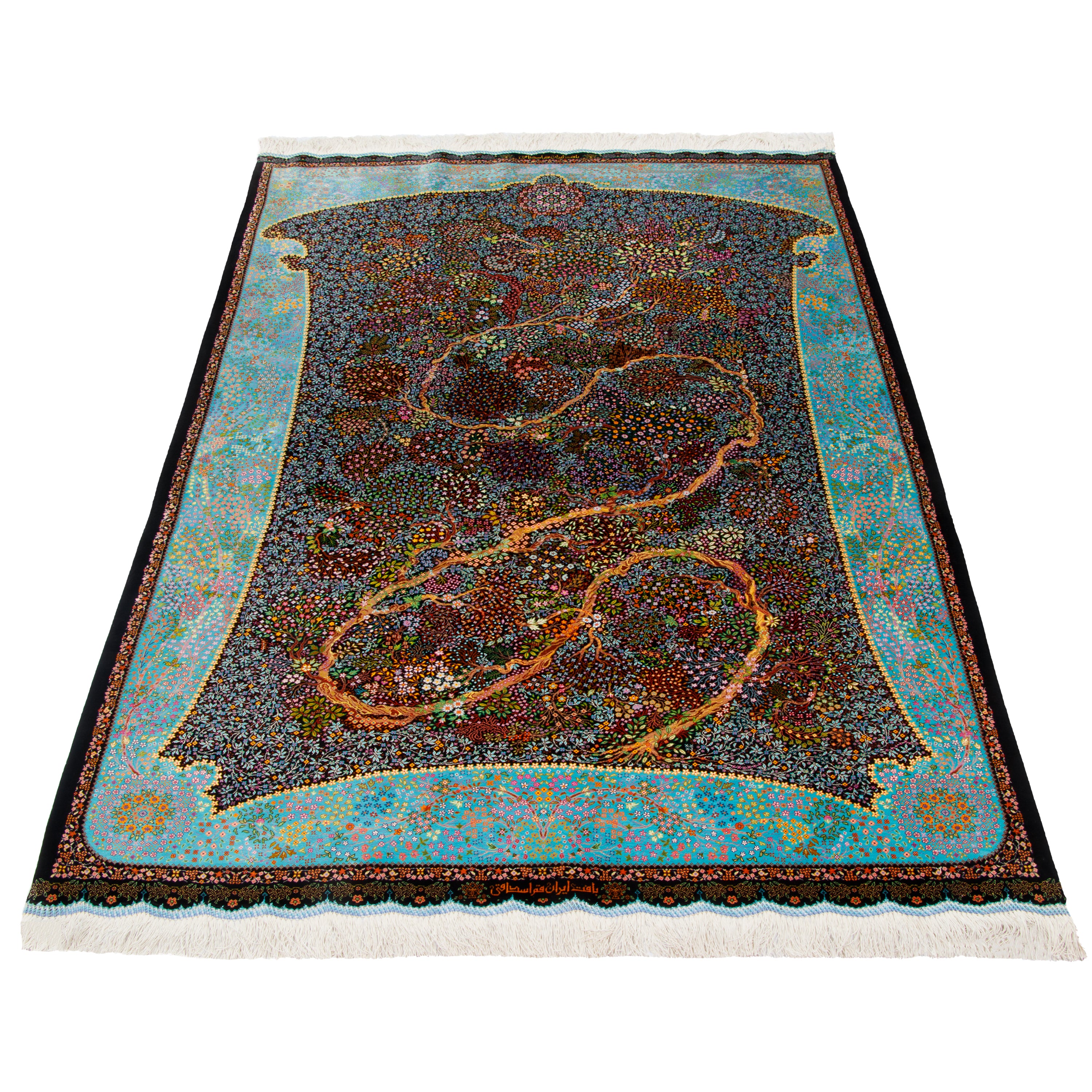
| Tree and garden designs | Plant, branch or garden compositions. The actual arrangement varies widely, so describe what is there. |
| Hunting design | A scene with hunting figures and animals. |
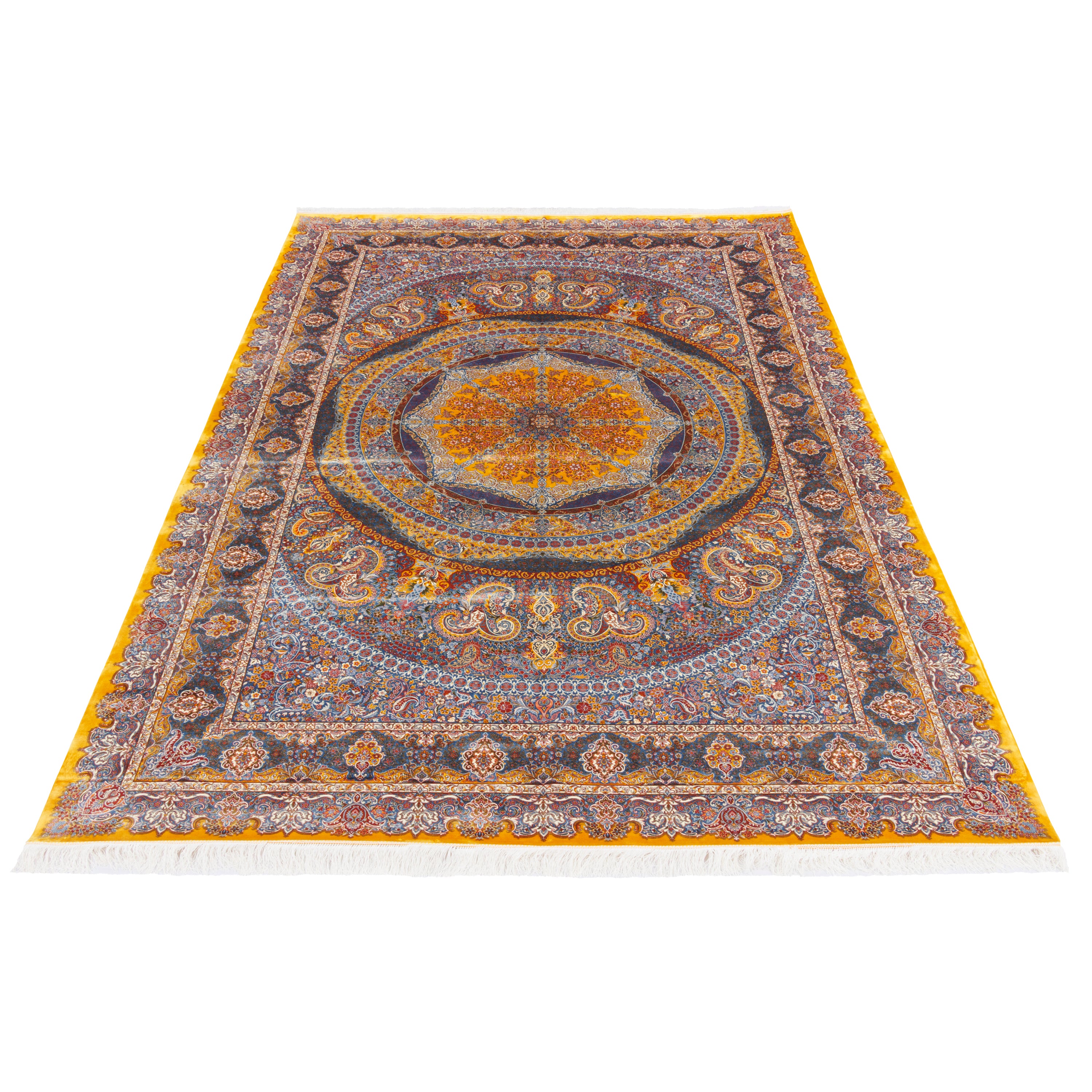
| Gombadi (also spelled gonbadi) | A dome-like radial composition, read from the centre outward. It need not reproduce any particular mosque dome. |
Many carpets combine several of these. A lachak toranj carpet may fill its field with Shah Abbasi flowers and eslimi scrolls; an afshan carpet may be built from a herati repeat. The name you hear is usually the dominant layout, not a complete inventory.
A design name is not a place of weaving
This is the single most common misunderstanding. Medallions, Shah Abbasi flowers and arabesques appear in carpets from many weaving centres. A carpet described as a "Heriz design" has a design associated with Heriz; that label alone does not mean it was woven in Heriz.
A good description answers three separate questions: where the carpet was woven, what the design is, and what the carpet is made of. If a seller gives you only the design name, ask for the other two. Our guide to Persian carpet weaving centres explains how city, design and workshop names differ.
An example from our collection: a square gombadi
One of the more unusual pieces in our collection shows how a design is best described. It is a square Tabriz carpet measuring 6 × 6 m, an area of 36 m², woven with a silk warp and a kork wool pile with silk highlights. The woven signature reads "Iran Tabriz Azimzadeh Carpet".
The design is radial, framed by an octagonal composition within the square. It is a gombadi design, and it is not attributed to any particular mosque. That is exactly how it should be presented: by what the design does, not by a history it does not have. Browse our square handmade rugs for other square formats.
How to read a carpet's design in a showroom
- Stand back and name the overall composition: medallion, medallion and corners, all-over, compartments or scene.
- Identify the two or three main colours and how they are distributed.
- Look at the scale of the detail. Small, dense motifs read very differently from large open ones, especially from across a room.
- Look at how the border frames the field. A wide border makes a carpet feel more formal and more contained.
- Only then relate it to your room: which way the medallion will face, what furniture will cover, and how much of the border will stay visible.
A maker's name or a historical attribution belongs at the end of this process, and only when the carpet's record supports it.
Choosing a design for your room
A medallion design (toranj or lachak toranj) gives a room a clear centre and works best when the medallion stays visible, for example under a coffee table rather than a large sofa. An all-over design (afshan or sarasar) is more forgiving when furniture covers part of the carpet, because no single element is lost. A kheshti design reads well in long rooms and corridors, where the panels create rhythm. You can compare many of these layouts in our classic and traditional handmade carpets.
Frequently asked questions
What does toranj mean in a Persian carpet?
Toranj is the central medallion. Lachak toranj means a central medallion with related corner pieces.
What is the difference between afshan and sarasar?
At Azimzadeh we use afshan and sarasar in the same sense: an all-over design without a single dominant medallion. Terminology can differ between traders, so ask what a seller means.
What is a herati design?
A herati, also called mahi, is a repeated composition commonly made of a flower framed by curved leaf forms. It is often used to build an all-over field.
Does a Heriz design mean the carpet was woven in Heriz?
No. A design name describes the layout or motif. Where the carpet was woven is a separate fact that should be confirmed from the carpet's record.
What is a gombadi design?
Gombadi, also spelled gonbadi, is a dome-like radial composition read from the centre outward. It does not need to reproduce the dome of a particular mosque.
See the designs side by side
Design names make most sense with several carpets on the floor at once. Visit our Dubai showroom and we will lay out a medallion, an all-over and a compartment design next to each other, so you can see which one suits your room.
- WhatsApp: +971 56 322 0485
- Showroom: +971 4 250 2123 — Al Barsha 2, Dubai
- Email: info@azimzadeh.ae
Azimzadeh — Persian carpets since 1969. Dubai showroom: Azimzadeh Carpet Trading LLC, Al Barsha 2. Design terms follow the usage our showroom team is trained on; confirm the details of any individual carpet before you commit to it.
Related reading: the parts of a Persian carpet · Persian rug sizes · what determines carpet price