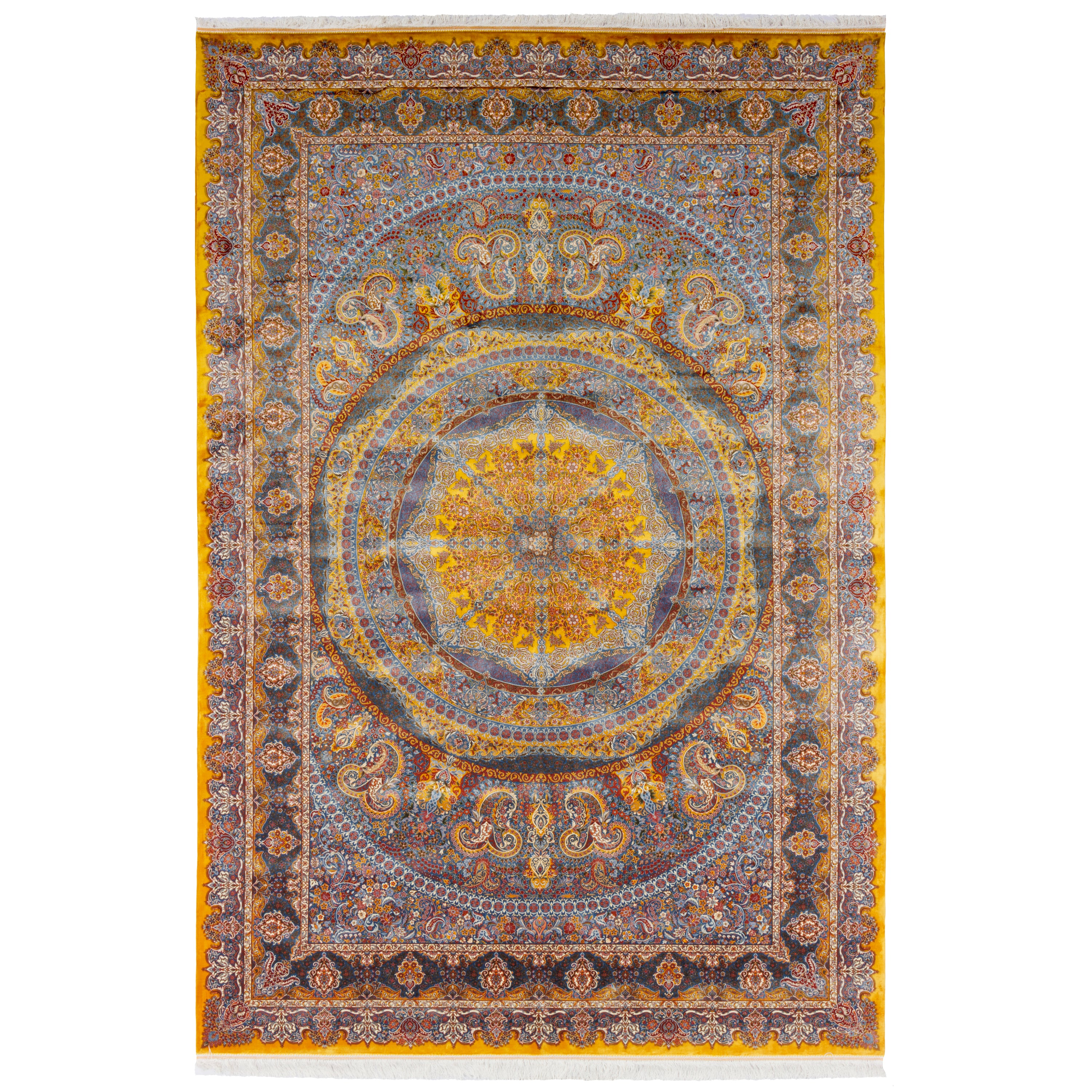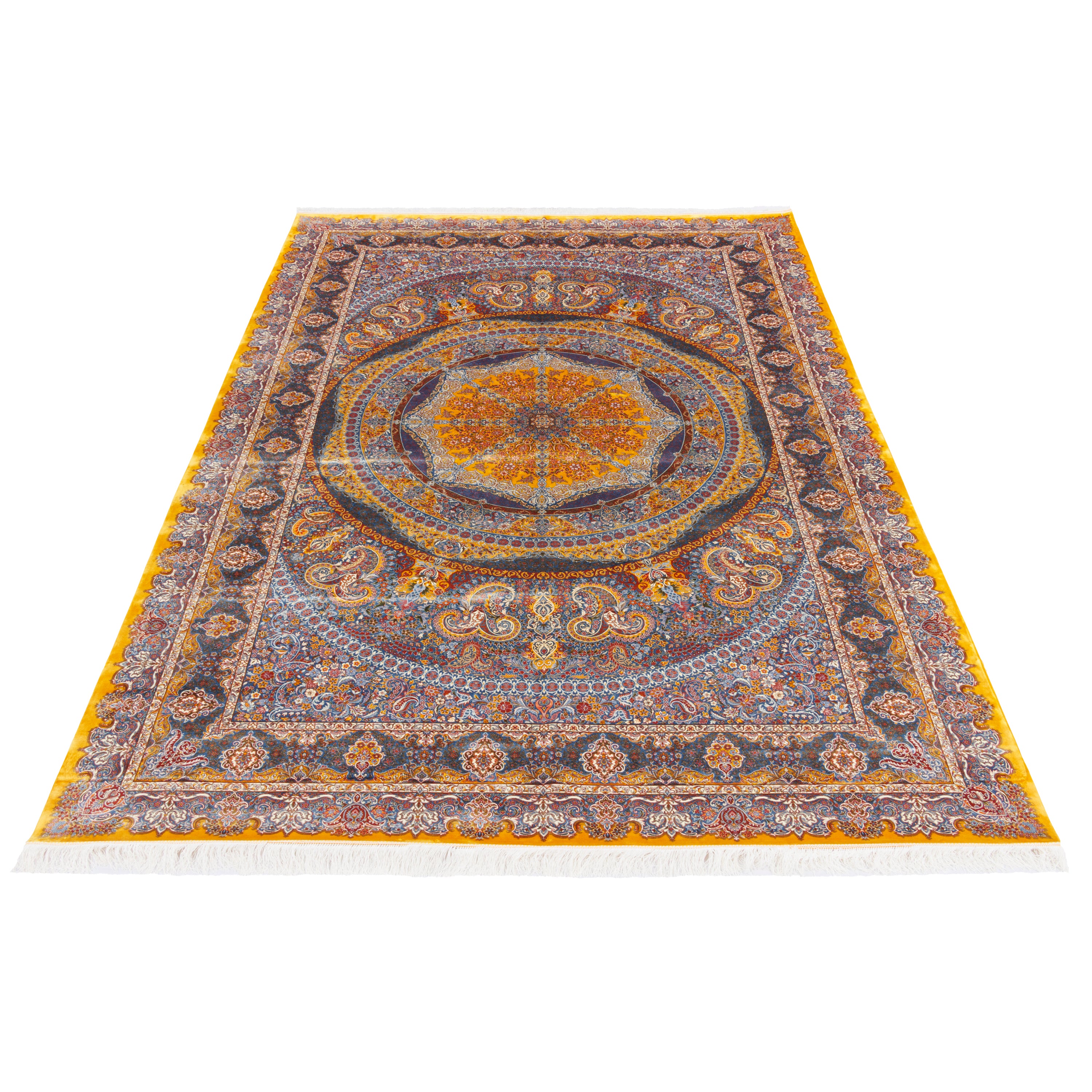
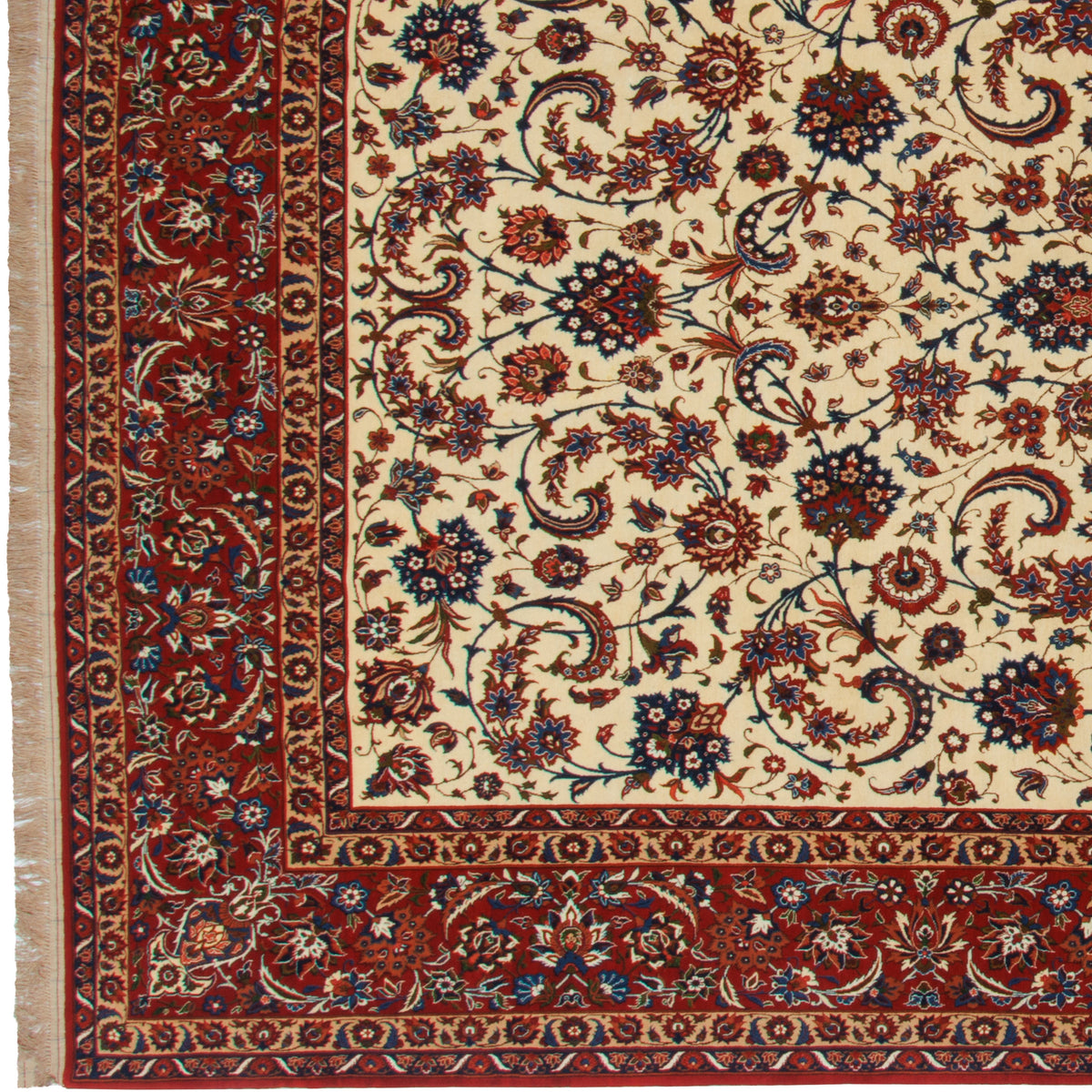
Tabriz, Qom, Isfahan, Nain: A Guide to Persian Carpet Weaving Centres
"Is it a Tabriz or a Qom?" is often the first question a customer asks, and it is a good one. Each weaving centre in Iran has its own habits of design, material and terminology. But the city is only one of three separate facts about a carpet, and mixing them up is the source of many confident but wrong descriptions.
This guide covers the main centres represented in our collection, the workshop and designer names associated with them, and how to ask the right question about origin.
City, design and workshop are three different questions
A weaving city tells you where the carpet was made. A design name tells you what the layout looks like. A workshop or designer name tells you who drew it or organised its production. These can all point in different directions: a carpet with a "Heriz design" may have been woven somewhere other than Heriz, and motifs such as the medallion, Shah Abbasi flowers and arabesques appear in carpets from many centres.
So when you ask where a carpet is from, the most useful answer confirms the place of weaving first, and then explains the design and material of that particular piece.
The main weaving centres in our collection
| Centre | What to know |
|---|---|
| Tabriz | A very wide range of named designs and fine drawing. Our Tabriz stock includes wool or kork wool with silk combinations, and full-silk Tabriz carpets also exist. Knot density is usually discussed in raj. |
| Qom | Our Qom assortment is natural full silk. That describes our collection, not every carpet ever woven in Qom. Raj is also the usual density term. |
| Isfahan | Best approached through design, colour and visual balance. Local weave terminology uses kheft, which needs care before it is converted into a knot count. |
| Nain | Known for the la terminology (4-la, 6-la, 9-la), which describes warp plies, not knot density. The actual structure and materials still have to be checked. |
| Shiraz and Fars | Our range includes regional kilims and gabbehs. A kilim is a flat weave; a gabbeh is a pile carpet. They are different constructions. |
| Mashhad | Our collection includes Amu Oghli carpets. Attribution and history are checked for each individual piece. |
| Kerman | Our collection includes named works. The workshop name comes from the product record, not from appearance. |
These centres are not exclusive categories of style. Kilims and gabbehs, for example, are made in more than one region, and classical medallion designs are woven across Iran.
Qom: full silk and woven workshop names
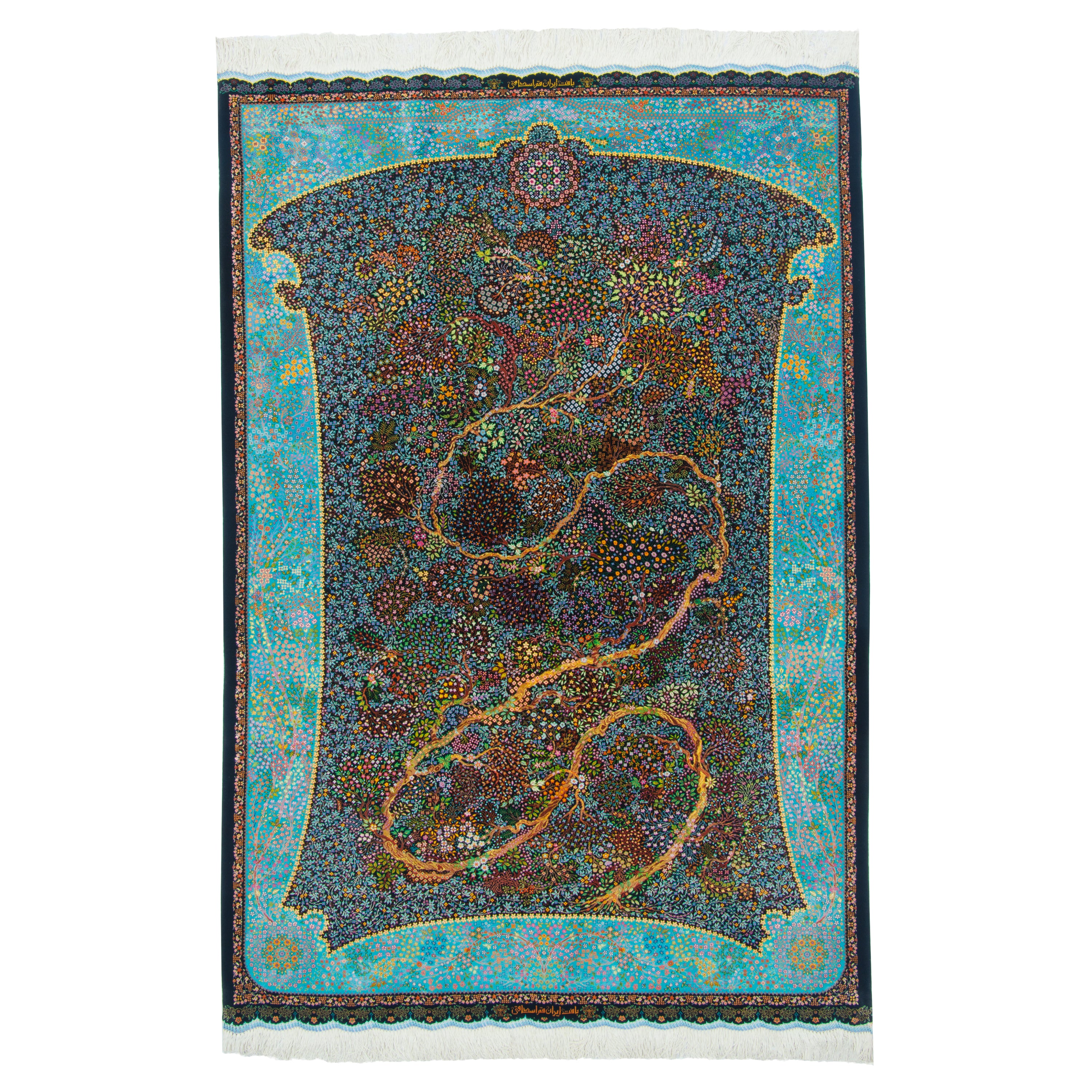
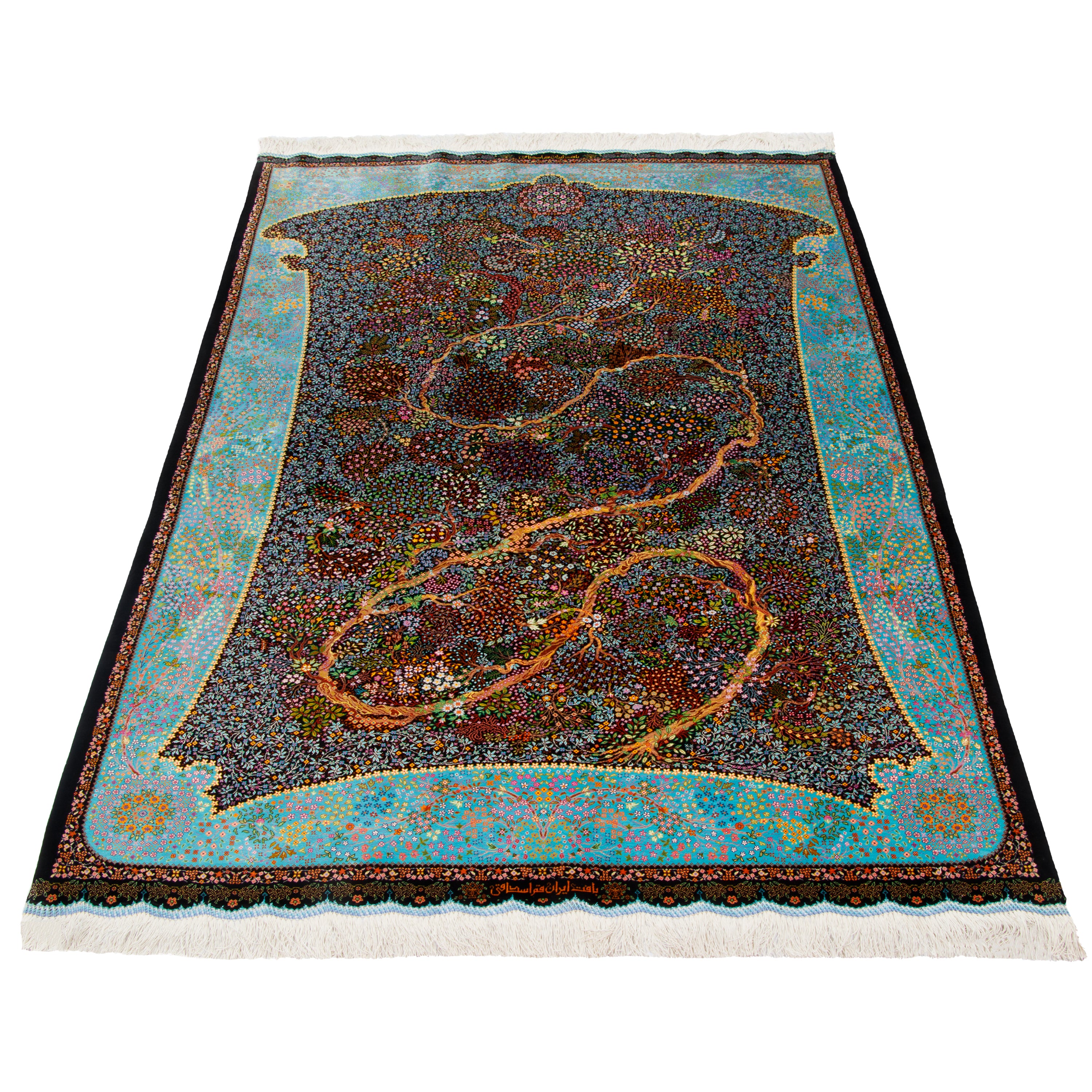
Qom carpets in our collection are natural full silk, which gives them their characteristic lustre and fine drawing. Qom workshops often weave their name into the carpet, frequently near the upper centre, although the position varies.
Workshop names in our main Qom stock include Kashizadeh, Kafashzadeh, Saeed and Mir Mehdi. Other Qom names you may see in our collection include Zabihi, Jamshidi, Raymon, Sadegh Nejad, Abbasi, Mohammadi, Eshaghi, Bahram and Ermi. Browse our full silk handmade rugs.
We purchase the completed production of the Kashizadeh workshops exclusively, which makes their carpets a particularly important part of our Qom collection.
Tabriz: design and trade names
Tabriz has one of the richest traditions of named design in Iran. Design and trade names associated with Tabriz in our collection include Salari, Gharebaghi, Khatibi, Olya, Shirfar, Heriz, Sadegh Nejad, Haji Jalili, Novin Far and Azimzadeh.
Some of these are designers, some are workshops, and some are established trade names for a style. That distinction matters, and the next section explains why.
Isfahan and Mashhad
In Isfahan, our named stock includes Seirafian and Golparvar. Isfahan carpets are best appreciated for the beauty of the design first, which is how we present them. In Mashhad, our collection includes carpets by Amu Oghli.
These lists describe the names in our collection and the vocabulary our team uses. They are not a ranking of makers.
Designer, workshop, weaver, commissioner
Four different roles stand behind a fine carpet:
- A designer creates the drawing.
- A workshop or producer organises production.
- A weaver executes the work at the loom.
- A commissioner orders the carpet.
One person can hold more than one role, but a name woven into a carpet does not establish all four. A woven signature supports identification. It is not, by itself, proof of authenticity or proof that the named master personally wove the piece. Differences in drawing, complexity and execution are often what explain price differences between carpets carrying the same name.
What "Azimzadeh" means on a carpet
You will find our own name among the Tabriz design and trade names. On a carpet, "Azimzadeh" can describe a carpet commissioned or produced by Mr Ahad Azimzadeh, or one woven from a design he supplied. He has also personally designed some works in the past. We describe him as the designer of a specific carpet only when that role is confirmed for that piece.
How to ask about a carpet's origin
- Ask where the carpet was woven, and whether that is confirmed.
- Ask what the design is called, separately.
- Ask what the warp, weft and pile are made of.
- If a maker's name is mentioned, ask what role that name played: designer, workshop or weaver.
If a seller cannot confirm an origin or a maker, the honest answer is "I will check the record". An improvised history does not make a carpet more valuable; an accurate one does.
Frequently asked questions
What is the difference between Tabriz and Qom carpets?
In our collection, Tabriz carpets cover a very wide range of named designs, often in wool or kork wool with silk, and some are full silk. Our Qom carpets are natural full silk and often carry a woven workshop name.
Are all Qom carpets silk?
No. Our Qom assortment is natural full silk, but that describes our collection, not every carpet ever woven in Qom.
Does a woven signature prove who made a Persian carpet?
No. A signature supports identification but is not, by itself, proof of authenticity or of personal weaving by the named master. The record for the individual carpet is what matters.
What does Azimzadeh design mean?
It can describe a carpet commissioned or produced by Mr Ahad Azimzadeh, or woven from a design he supplied. He is described as the designer only when that role is confirmed for the particular carpet.
Is a gabbeh from Shiraz a kilim?
No. A gabbeh is a pile carpet, often with a simpler and bolder design. A kilim is a flat weave with no pile. Both are made in the Shiraz and Fars region.
Compare the centres in person
The differences between a Tabriz, a Qom and an Isfahan are far clearer with the carpets side by side. Our Dubai showroom carries pieces from each centre, and we can check our Tehran branch if you are looking for something specific.
- WhatsApp: +971 56 322 0485
- Showroom: +971 4 250 2123 — Al Barsha 2, Dubai
- Email: info@azimzadeh.ae
Azimzadeh — Persian carpets since 1969. Dubai showroom: Azimzadeh Carpet Trading LLC, Al Barsha 2. Maker and workshop names describe our collection; confirm the record of any individual carpet before you commit to it.
Related reading: Persian carpet designs explained · kork, silk and viscose · what determines carpet price