Kork, Silk and Viscose: Reading Carpet Materials Honestly
Material is where carpet descriptions become slippery. The words used in the trade are a mixture of Persian terms, translated approximations and marketing names, and several of them sound like they guarantee something they do not.
This article goes through the terms you will actually encounter — kork, full silk, silk highlights, tamam nakh, viscose, modal, bamboo silk — and explains what each one establishes. The aim is that you can read any description, ours or anyone else's, and know which questions remain unanswered.
Kork is fine wool, not cashmere
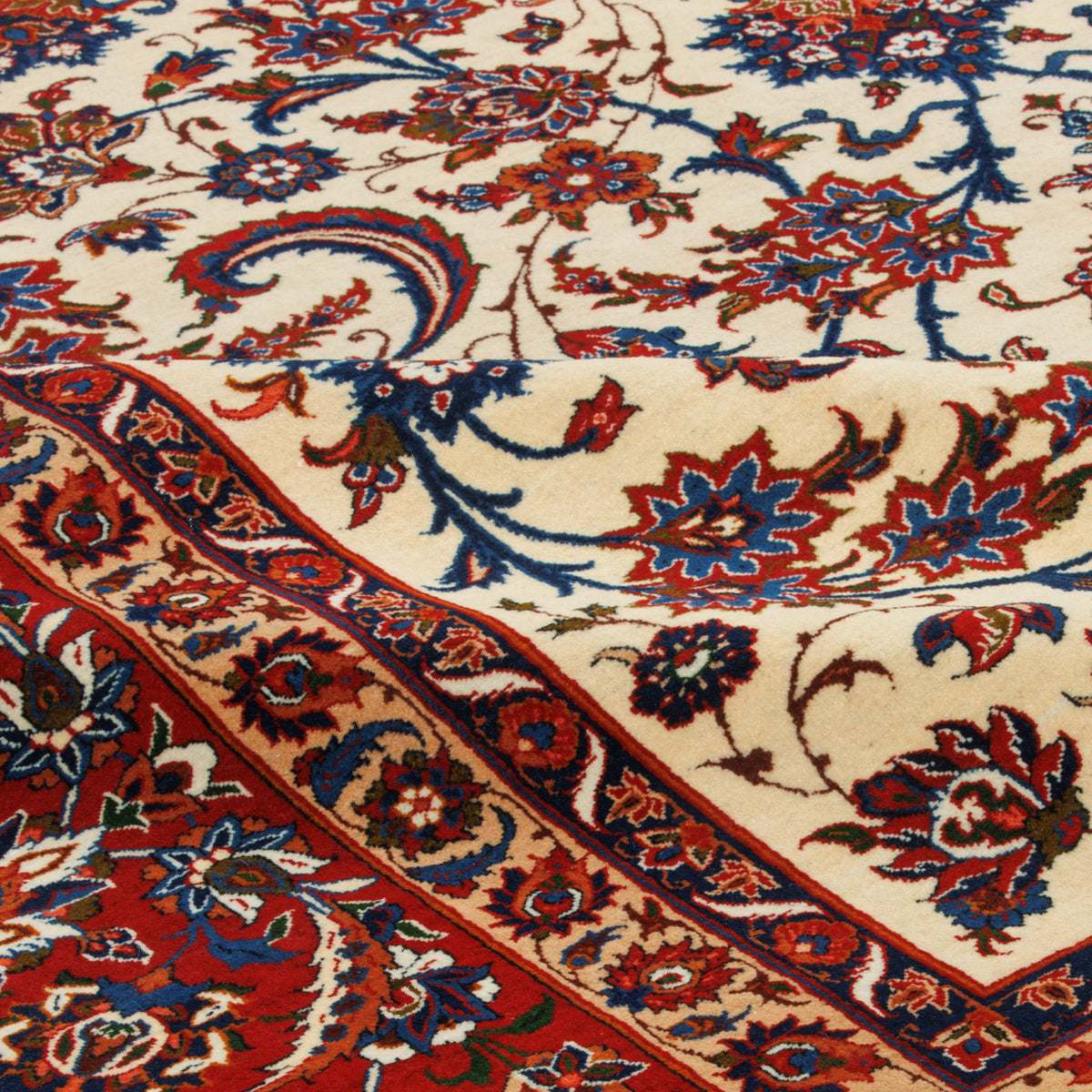
Kork is a trade term used for fine wool in Persian carpets. It is a quality description within wool. It is not automatically cashmere, and it should not be translated that way.
This matters because "kork" carries genuine meaning — it signals a finer, softer wool that takes detail well and is used in the better work from centres such as Tabriz, Isfahan and Nain. Inflating it into cashmere replaces a true claim with a false one.
Equally, a soft feel or a strong shine does not by itself prove which fibre is present. Several very different fibres produce a lustrous surface. Touch is a starting point for a question, not an answer.
The four material descriptions we use, and what each establishes
| Description | What it actually tells you | What it leaves open |
|---|---|---|
| Cotton warp with silk highlights | The warp is cotton and silk is used in selected details of the pile. | The main pile fibre and the weft. Ask separately. |
| Silk warp with silk highlights | The warp is silk and silk appears within the pile details. | The main pile may well be kork wool. The weft is not stated. |
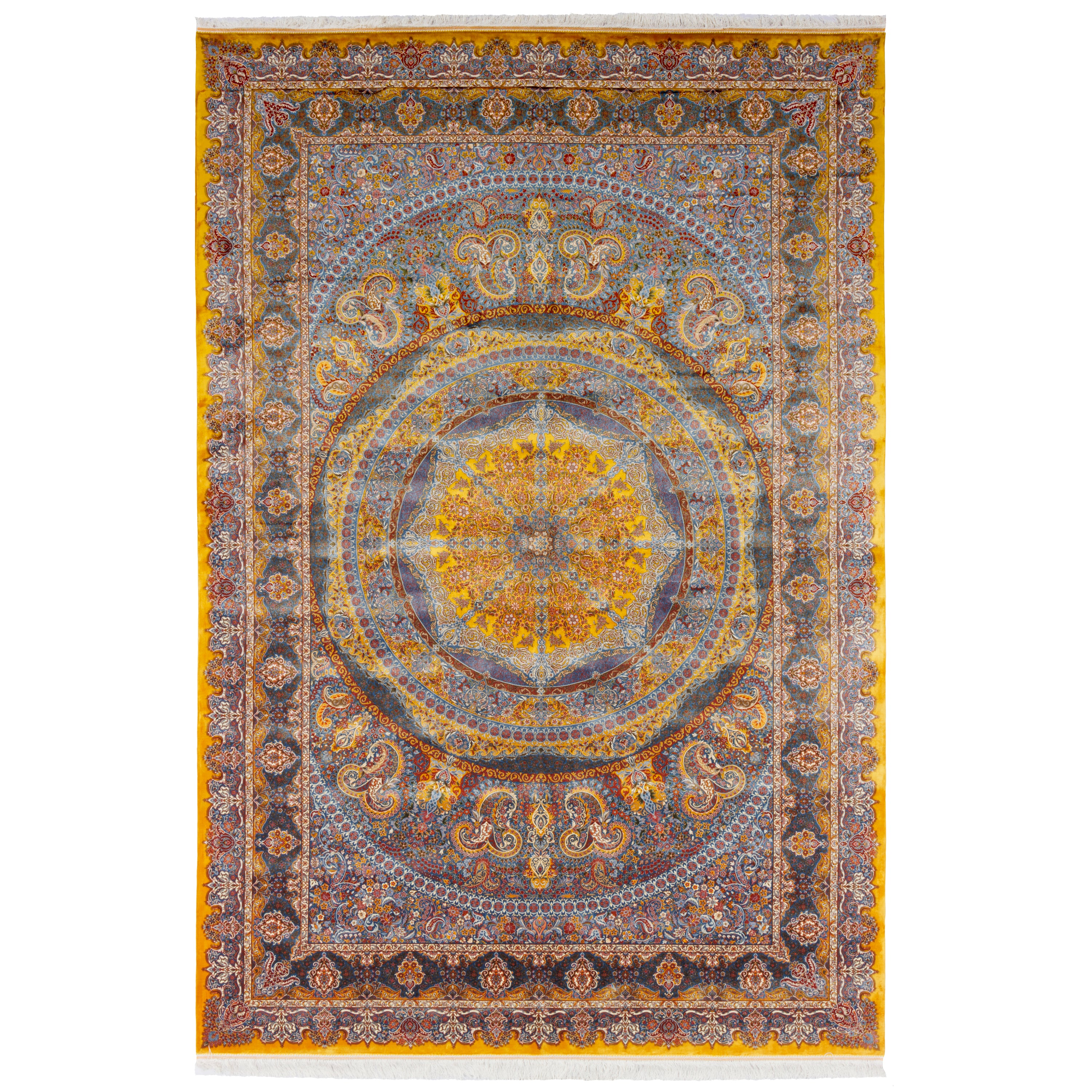
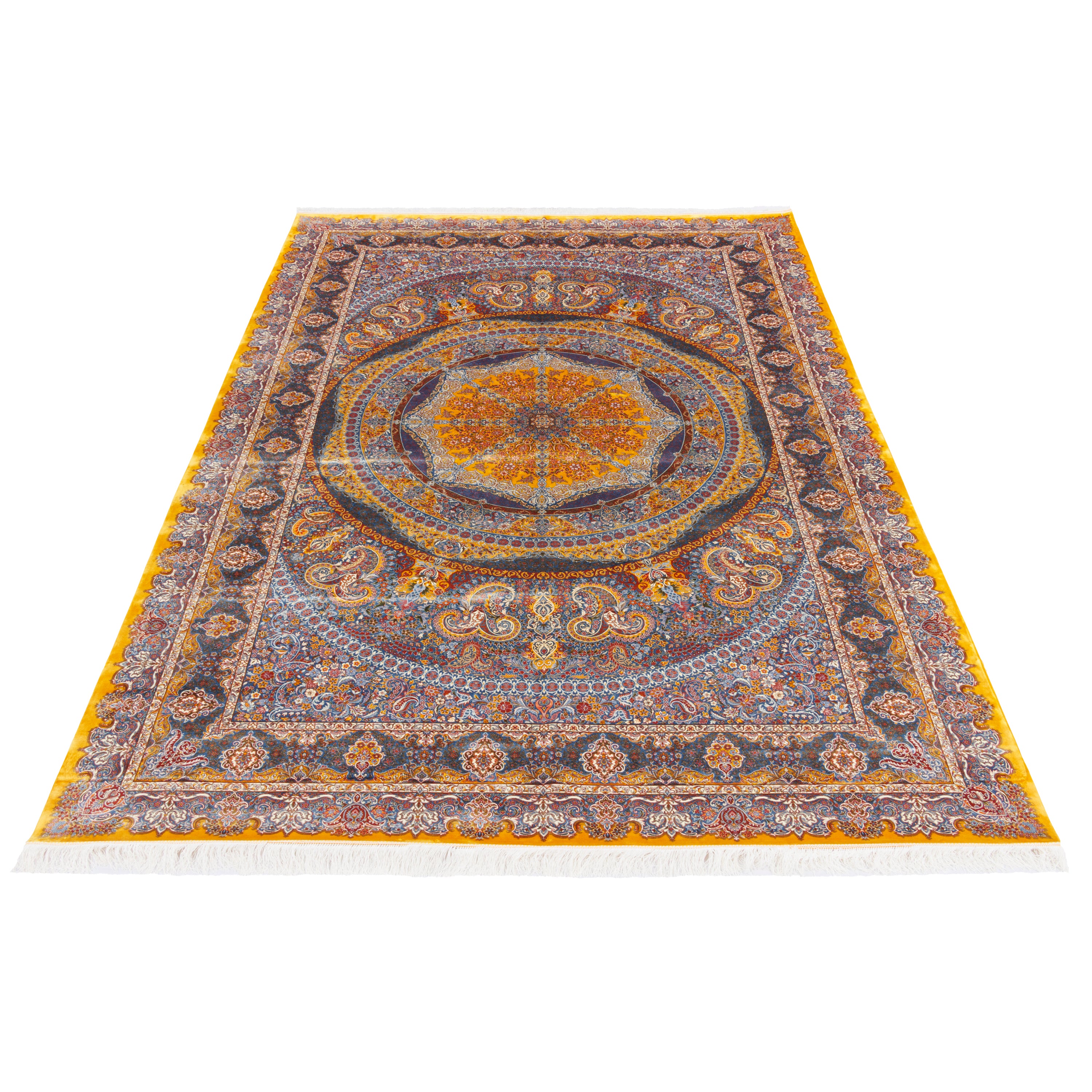
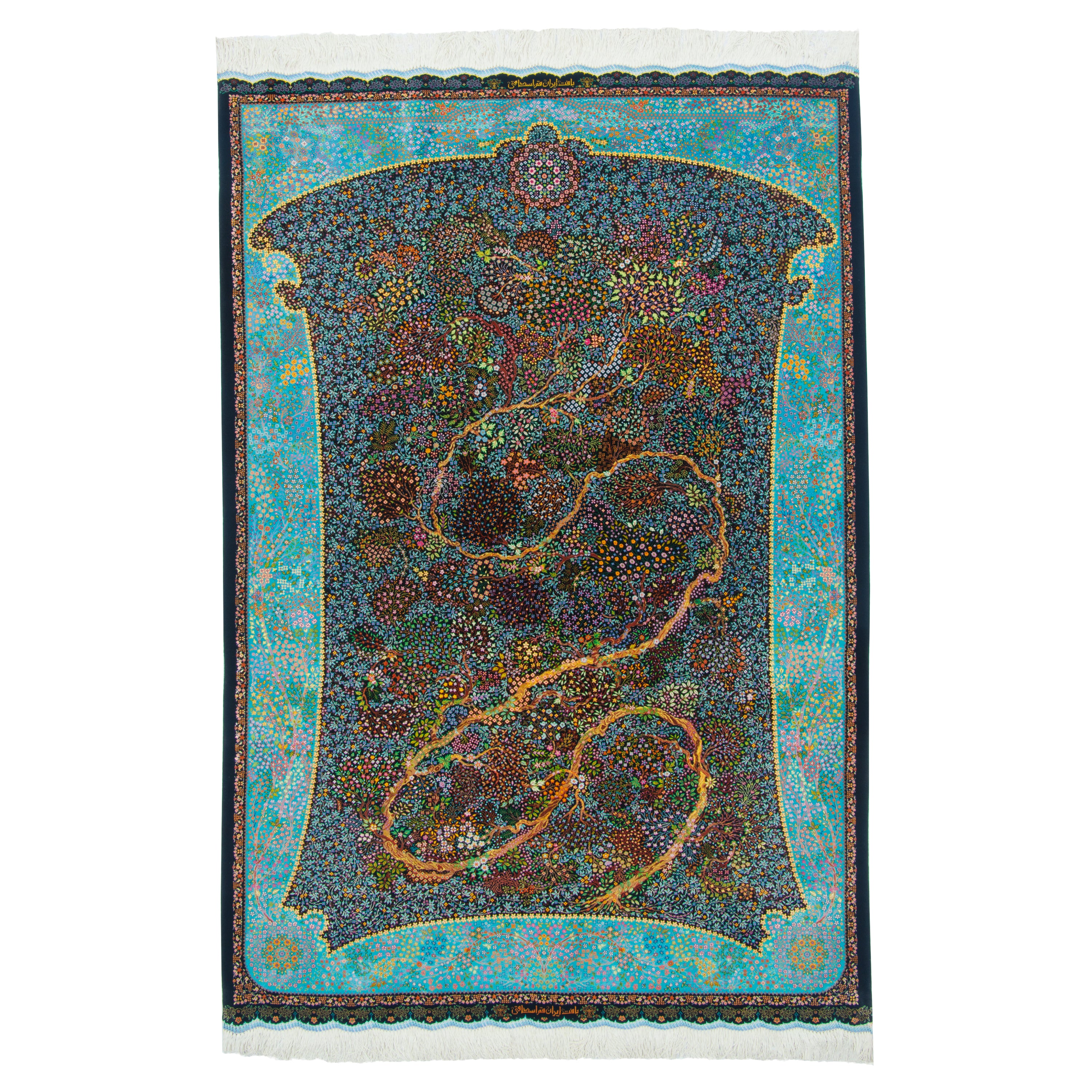
| Full silk | The carpet's main woven components are natural silk. | Still verify the individual specification of the piece. |
| Wool, or wool and silk | A broad material category. | Fibre percentages and every foundation material. |
Notice the pattern: a silk warp does not establish that the weft is silk, and silk highlights do not make a carpet a silk carpet. These are not evasions — they are simply different components of the same object.
A properly complete description sounds like this: "This is a Tabriz carpet with a silk warp and a kork wool pile with silk highlights." If the weft material is known, it is added. If it is not known, it is not invented.
You can browse by these categories directly: full silk handmade rugs, wool & silk, and full wool.
"Tamam nakh" and other phrases that need unpacking
Nakh means yarn or thread. Tamam nakh is a market expression that gets used imprecisely, and it is not by itself an exact fibre declaration. It should not be automatically translated as "all cotton" or "all wool" — ask which component the speaker means.
Similarly, cotton in a carpet is normal rather than a compromise. Cotton is commonly used in foundations because it is stable and holds tension well. A wool pile on a cotton foundation is a wool-pile carpet, full stop.
Machine-made carpets: reading the label on the back
Machine-woven carpets carry a material label, and the label is the primary evidence. Learn to recognise fibres through comparison, but never replace a documented composition with a guess based on touch.
| Label term | What it means |
|---|---|
| Polyester | A synthetic fibre. Check the composition and construction of the particular carpet. |
| Cotton | A natural plant fibre, often appearing in a foundation or a blend. |
| Acrylic | A synthetic fibre. It is not wool and should not be described as such. |
| Viscose | A manufactured, regenerated cellulose fibre. It is not natural silk. |
| Modal | A regenerated cellulose fibre. TENCEL Modal is one branded example; the word "modal" alone does not establish that brand. |
| Bamboo silk | A trade name that can describe a bamboo-derived regenerated fibre. It does not mean silkworm silk. |
| Mixed fibre labels | Read the stated fibres and percentages. If the proportions are not supplied, they should not be invented. |
Why "bamboo silk" deserves a straight answer
Bamboo silk and viscose rugs can be genuinely beautiful. They take dye well, they have a distinctive sheen, and in the right room and the right traffic they are a sensible choice. Our own machine-made assortment includes viscose, modal, acrylic, polyester, cotton and blends.
What they are not is silk. The word "silk" inside a collection name is a trade description, not a fibre declaration. A customer who buys a "bamboo silk" rug believing it is silkworm silk has been misled, and will discover it the first time the rug needs cleaning — because the care requirements are genuinely different.
Our rule is simple: when we describe a regenerated fibre, we name it clearly, even when the collection name includes the word silk.
Shine is not a fibre test
Several fibres give a smooth, lustrous surface. Similar shine does not make composition or care needs identical. Nor is there a universal price or quality ladder based on the fibre name alone — the construction, appearance, specification and suitability of the actual carpet decide whether it is right for you.
Shaneh: the machine-made equivalent of a density number
Machine-woven carpets are graded by shaneh, the trade reed-count used for these products. Our assortment ranges from 700 to 1,600 shaneh.
Shaneh figures are not hand-knotted raj values and the two should never be compared directly. They describe different manufacturing processes. If you want to understand hand-knot density, see our separate guide to what raj really means. For sizes, shapes and cutting, see our machine-made carpet guide.
Colour, dye and what "natural" proves
Natural dyes come from plants and animals — madder and indigo are familiar plant sources, while cochineal is insect-derived. Synthetic dyes are manufactured colourants.
Neither word settles quality. "Natural" does not guarantee that a colour will resist light or washing, and "synthetic" does not mean it will not. Dye identification can require records and specialist analysis; a visual impression does not establish that every colour in a particular carpet is vegetable-dyed.
Resistance to light, to water and washing, and to rubbing are three separate properties, and one is not proof of another. Different colours within the same carpet — and restored areas — can behave differently. This is also why no responsible seller should demonstrate colourfastness with water or detergent on a showroom floor. Our carpet care guide covers sunlight and cleaning.
One thing shine does tell you
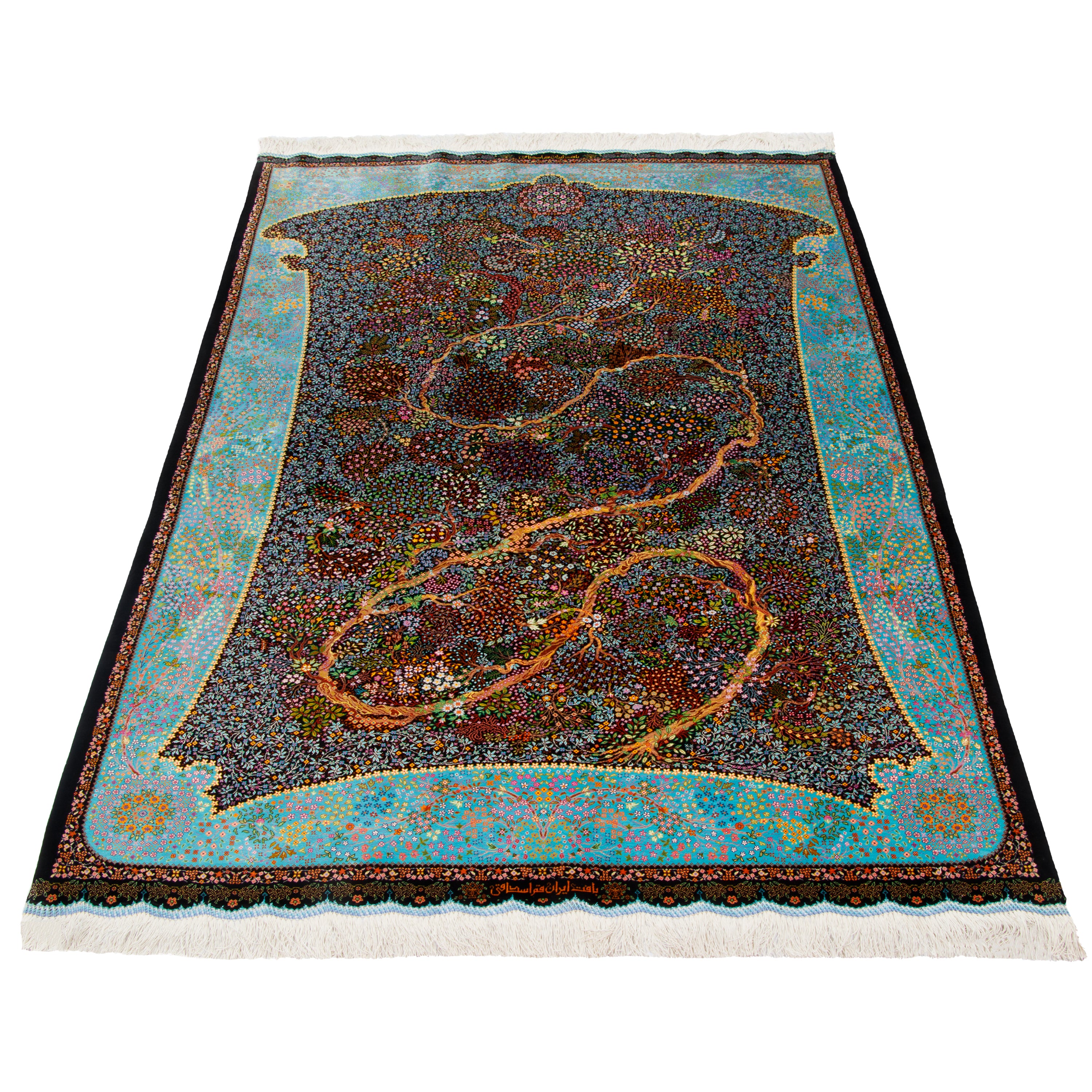
The direction in which the pile lies changes how light reflects, so a carpet can look noticeably lighter from one end and darker from the other. This is often striking in silk and also happens in wool. It is a real optical effect worth seeing before you buy — but it is not a test proving that a fibre is natural silk.
Always ask to see a silk carpet from both ends, under the same lighting, and think about which direction it will lie in your room. A phone screen will not reproduce what you see in person.
Frequently asked questions
Is kork wool the same as cashmere?
No. Kork is a trade term for fine wool used in Persian carpets. It describes a quality of wool and does not mean cashmere.
Is viscose the same as silk?
No. Viscose is a manufactured, regenerated cellulose fibre. It can look lustrous, but it is not natural silk and its care requirements are different.
Is a bamboo silk rug made of silk?
No. "Bamboo silk" is a trade name that usually describes a bamboo-derived regenerated fibre. It does not contain silkworm silk. Always confirm the actual label.
Does a silk warp mean the whole carpet is silk?
No. A silk warp tells you about the foundation only. The main pile may be kork wool, and the weft material is a separate question.
What does "full silk" mean at Azimzadeh?
We use "full silk" for carpets whose main woven components are natural silk. The specification of each individual piece should still be verified.
Are vegetable-dyed carpets more colourfast?
Not necessarily. Natural and synthetic dyes can both be well or poorly executed. Light, water and rub resistance are separate properties, and identifying dyes reliably can require specialist analysis.
Ask us what a carpet is actually made of
If you are looking at a carpet anywhere — ours or elsewhere — and the material description leaves a question open, send it to us. Tell us what the label or the seller said, and we will tell you what that wording does and does not establish.
- WhatsApp: +971 56 322 0485
- Showroom: +971 4 250 2123 — Al Barsha 2, Dubai
- Email: info@azimzadeh.ae
Azimzadeh — Persian carpets since 1969. Dubai showroom: Azimzadeh Carpet Trading LLC, Al Barsha 2. The material terminology in this article is the standard our own showroom team is trained on.
Previously: what is raj. Next: what actually determines the price of a handmade carpet. Also useful: Tabriz, Qom, Isfahan and Nain.