Machine-Made Carpets: Sizes, Shapes, Shaneh and Fibres Explained
Machine-made carpets are often the right answer: for a busy family room, a children's room, a rental property, a hallway that takes heavy traffic, or a modern interior that needs an exact size and colour. They are a manufacturing category, not a judgement of quality, and a well-chosen machine-woven carpet can serve a room very well.
Our machine-made assortment is sourced from manufacturers in Iran. This guide covers how these carpets are graded, the sizes and shapes available, and how to read what they are made of.
Start with the style
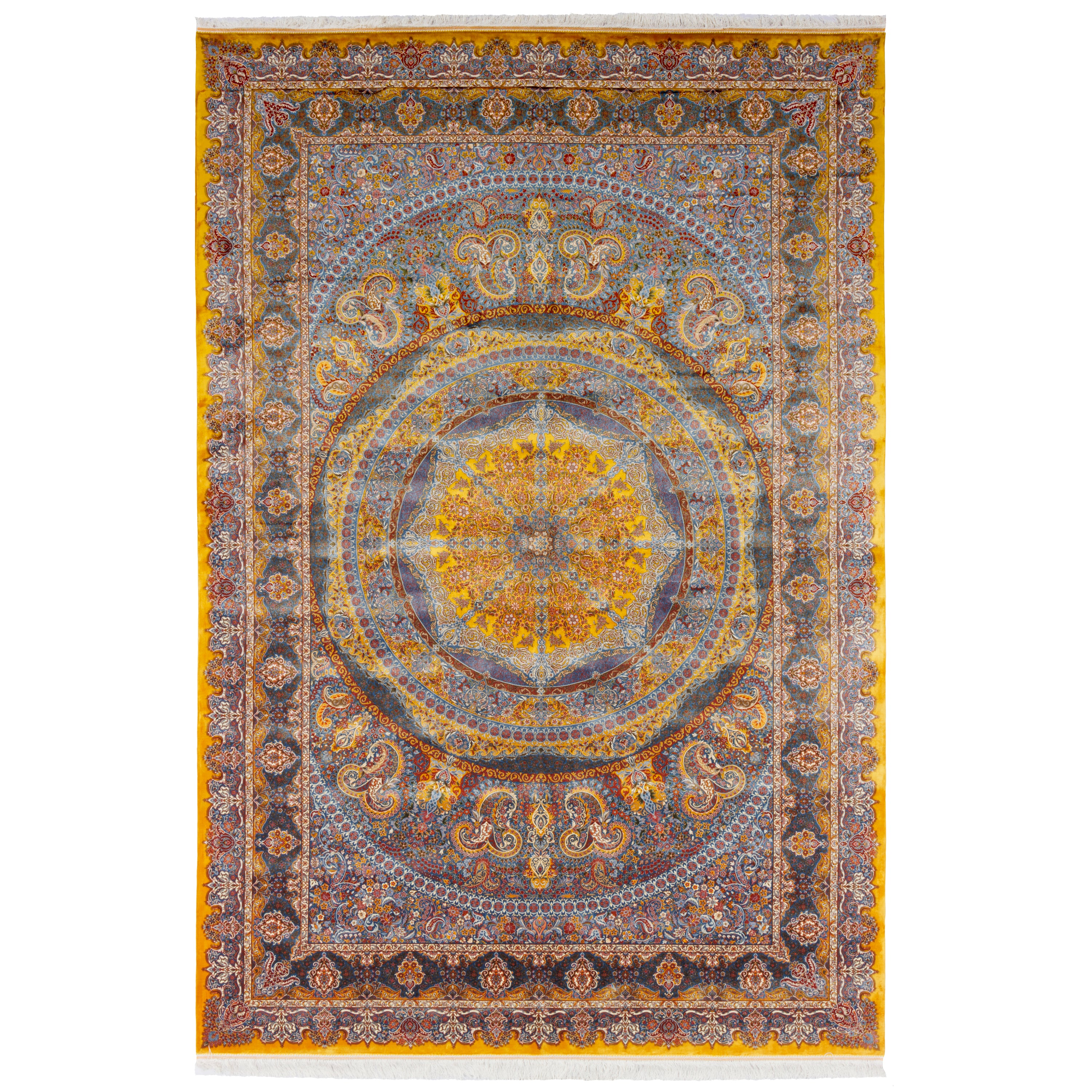
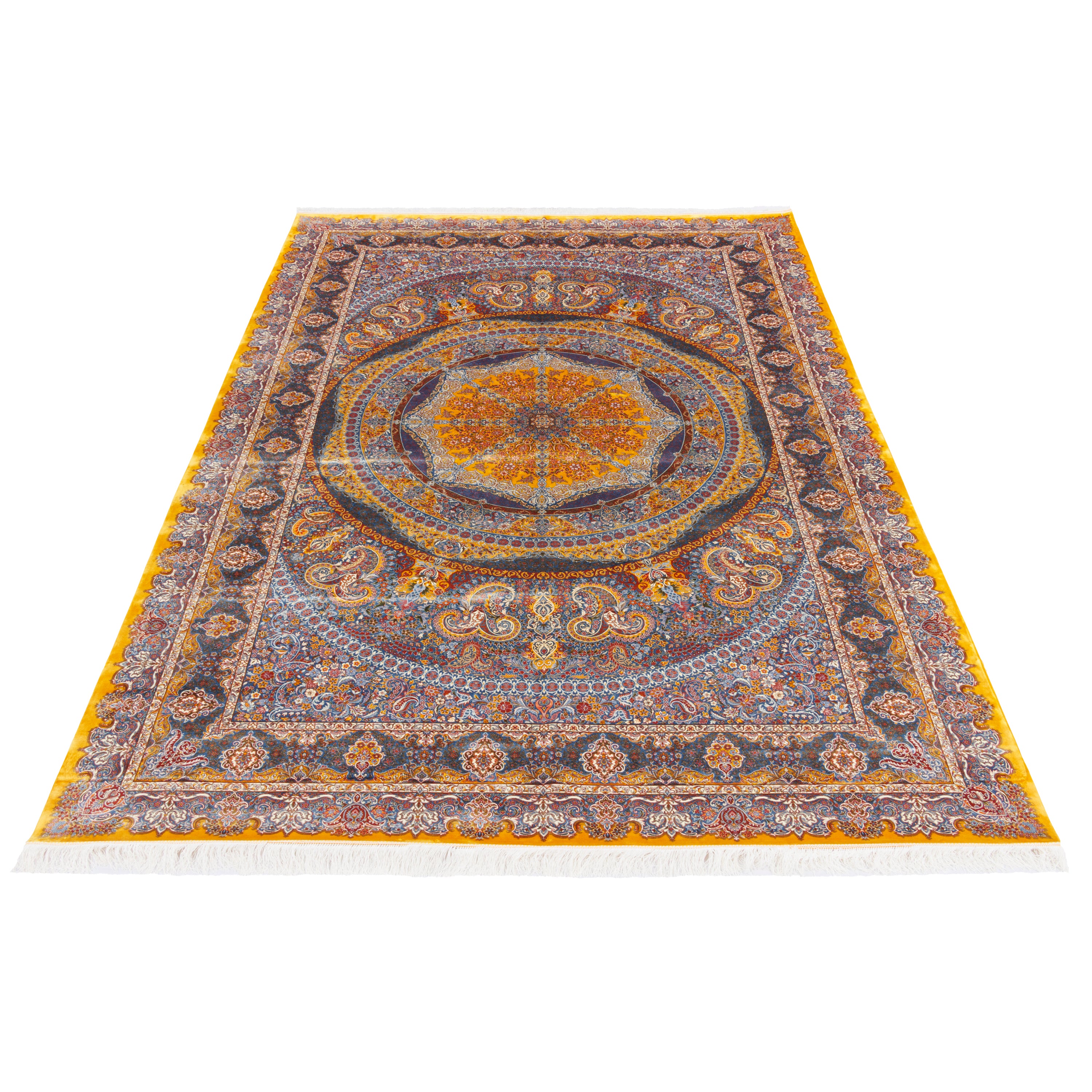
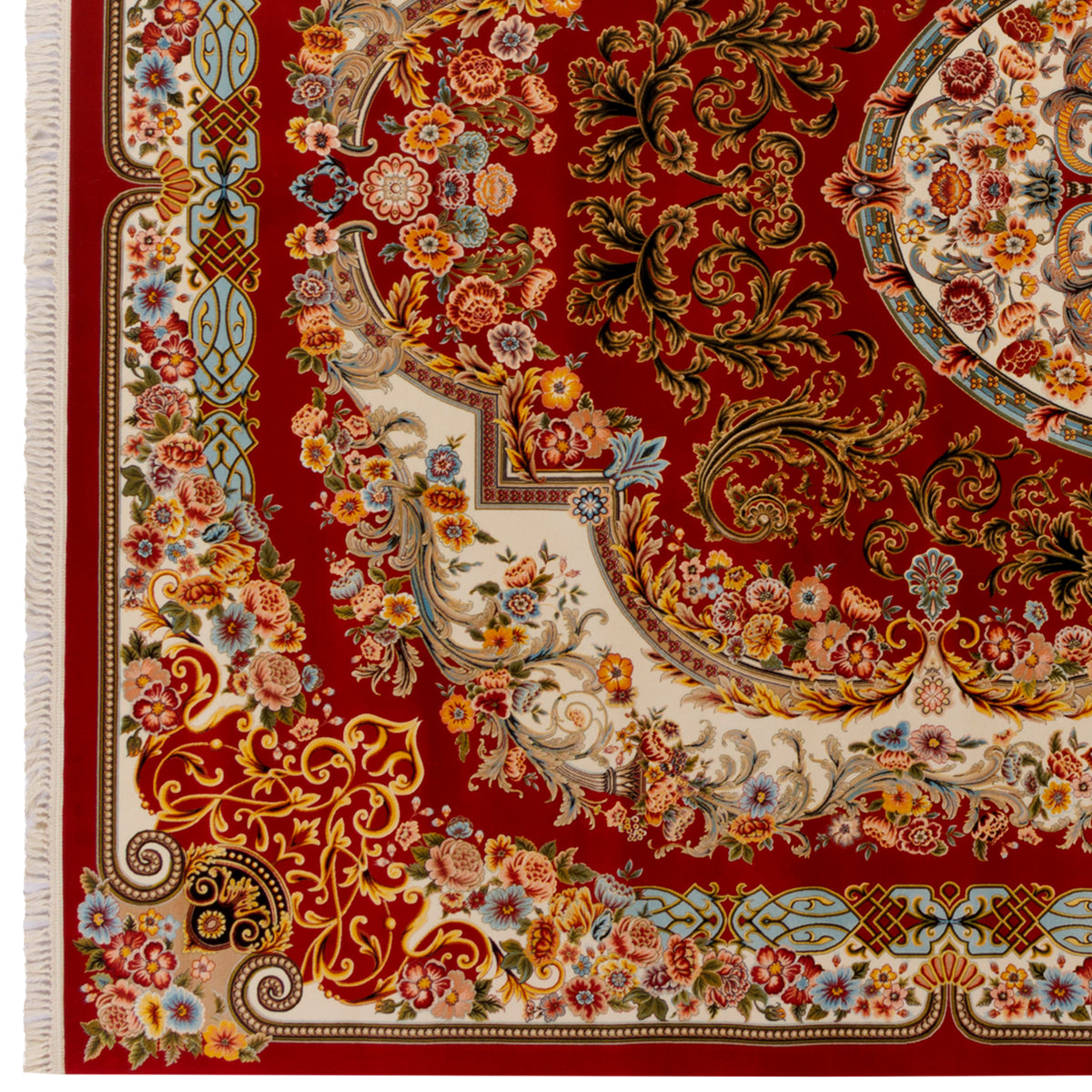
The first choice is usually between a modern and a classical design. Classical machine-made carpets reproduce traditional layouts such as medallions and all-over florals; modern designs use abstract, geometric or minimal patterns. Once the style is settled, the fibre, dimensions and intended room narrow the choice quickly.
Browse: modern machine-made rugs · classic machine-made rugs
What shaneh means
Machine-woven carpets are graded by shaneh, the trade reed-count used for these products. Our assortment ranges from 700 to 1,600 shaneh.
Shaneh is not the same thing as raj. Raj is the knot count used for hand-knotted carpets, and the two numbers describe completely different manufacturing processes. A 1,200 shaneh machine-made carpet and a 60 raj hand-knotted carpet cannot be compared by their numbers. For hand-knotted density, see our guide to raj.
Standard machine-made carpet sizes
| Trade size | Dimensions | Actual area |
|---|---|---|
| 3 metre | 1.5 × 2.25 m | 3.375 m² |
| 6 metre | 2 × 3 m | 6 m² |
| 9 metre | 2.5 × 3.5 m | 8.75 m² |
| 12 metre | 3 × 4 m | 12 m² |
| 20 metre | 4 × 5 m | 20 m² |
| 24 metre | 4 × 6 m | 24 m² |
| 28 metre | 4 × 7 m | 28 m² |
| 32 metre | 4 × 8 m | 32 m² |
The range starts with small sizes from 60 × 90 cm, and common large stock reaches 4 × 8 m. A listed size describes the range, not a promise that every design is made in it, so check the size for the design you like.
Browse by size: under 1.5 m² · 100 × 150 cm · 150 × 225 cm · 200 × 300 cm · 250 × 350 cm · 300 × 400 cm · 400 × 600 cm · larger than 24 m²
Round, square and runner carpets
Machine-made carpets come in rectangles, squares, circles and runners.
- Round carpets start at 1 m in diameter and increase in half-metre steps within the range. The diameter is the full width across the circle, not the radius.
- Runners run from 1 × 2 m through to 1 × 6 m, with smaller formats also available.
- Other formats include 80 × 120 cm modal prayer rugs and 2 × 3 m children's carpets.
Browse: round · square · runners
Can a machine-made carpet be cut to size?
Some modern designs can be cut to a requested size and given a newly finished edge. It is a useful option for an awkward alcove or a room with fixed furniture. But not every carpet is suitable: cutting changes how the pattern and border sit, so we check the effect on the design first. A modern label alone does not make a carpet suitable for cutting.
Because a cut carpet is altered to your specification, return conditions change once it has been cut. We explain those terms before any alteration.
One related point: a carpet wider than the usual showroom range is not automatically made from two joined pieces. The construction and the manufacturer's specification tell you that, not the width.
Reading the fibre label
Every machine-made carpet carries a material label on the back, and that label is the primary evidence of what it is made of. Our assortment includes viscose, modal, acrylic, polyester, cotton and blends.
The key points: viscose and "bamboo silk" are regenerated fibres, not natural silk; acrylic is a synthetic fibre, not wool; and similar shine does not mean similar composition or care needs. There is no universal price or quality ladder based on the fibre name alone. Our guide to kork, silk and viscose explains each label term in detail.
Frequently asked questions
What is shaneh in a machine-made carpet?
Shaneh is the trade reed-count used to grade machine-woven carpets. Our assortment ranges from 700 to 1,600 shaneh. It is not a hand-knotted raj value and the two should not be compared.
What sizes do machine-made carpets come in?
Common trade sizes run from 1.5 × 2.25 m up to 4 × 8 m, with small sizes from 60 × 90 cm. Round carpets start at 1 m diameter, and runners run from 1 × 2 m to 1 × 6 m.
Can a machine-made rug be cut to size?
Some modern designs can be cut and given a finished edge, but the effect on the pattern and border must be checked first. Return conditions change once a carpet has been cut.
Is a bamboo silk rug real silk?
No. Bamboo silk is a trade name for a regenerated fibre. It does not mean silkworm silk, so always check the fibre label.
Is a wide machine-made carpet made of two pieces?
Not necessarily. A width above the common range is not proof of two joined pieces. Check the construction and the manufacturer's specification.
Find the right machine-made carpet
Tell us the room, the size and the style you have in mind, and we will show you what is in stock, including round and runner formats.
- WhatsApp: +971 56 322 0485
- Showroom: +971 4 250 2123 — Al Barsha 2, Dubai
- Email: info@azimzadeh.ae
Azimzadeh — Persian carpets since 1969. Dubai showroom: Azimzadeh Carpet Trading LLC, Al Barsha 2. Size ranges describe our assortment; check stock for the design you choose.
Related reading: reading carpet materials · Persian rug sizes · all machine-made carpets