How a Hand-Knotted Persian Carpet Is Woven: Persian vs Turkish Knot
A hand-knotted carpet is built one knot at a time, row by row, over months and sometimes years. Knowing how that happens changes the way you look at a finished carpet: you start to see the chart behind the pattern, the rows in the pile, and the reason a small carpet can take as long to weave as a large one.
This article walks through the stages of weaving, explains the two knot structures you will hear about, and clears up what a knot name can and cannot tell you.
The stages of weaving a hand-knotted carpet
- Preparing and dyeing the yarn. Wool, kork wool or silk is prepared and dyed in the colours the design requires.
- Setting up the loom and the warp. The warp threads, the carpet's lengthwise foundation, are strung on the loom under tension. They run the full length of the carpet and later become the fringe.
- Building rows of knots. The weaver ties each knot by hand around the warp threads, choosing the colour dictated by the design, and cuts the yarn.
- Inserting and beating down the weft. After each row of knots, weft threads are passed across the warp and beaten down firmly to lock the row in place.
- Finishing the pile and edges. When the weaving is complete, the pile is finished to an even surface, and the side edges and ends are secured.
If you would like to name every part of the finished structure, our guide to warp, weft, pile and fringe covers them in detail.
The naqsh: the chart behind the pattern
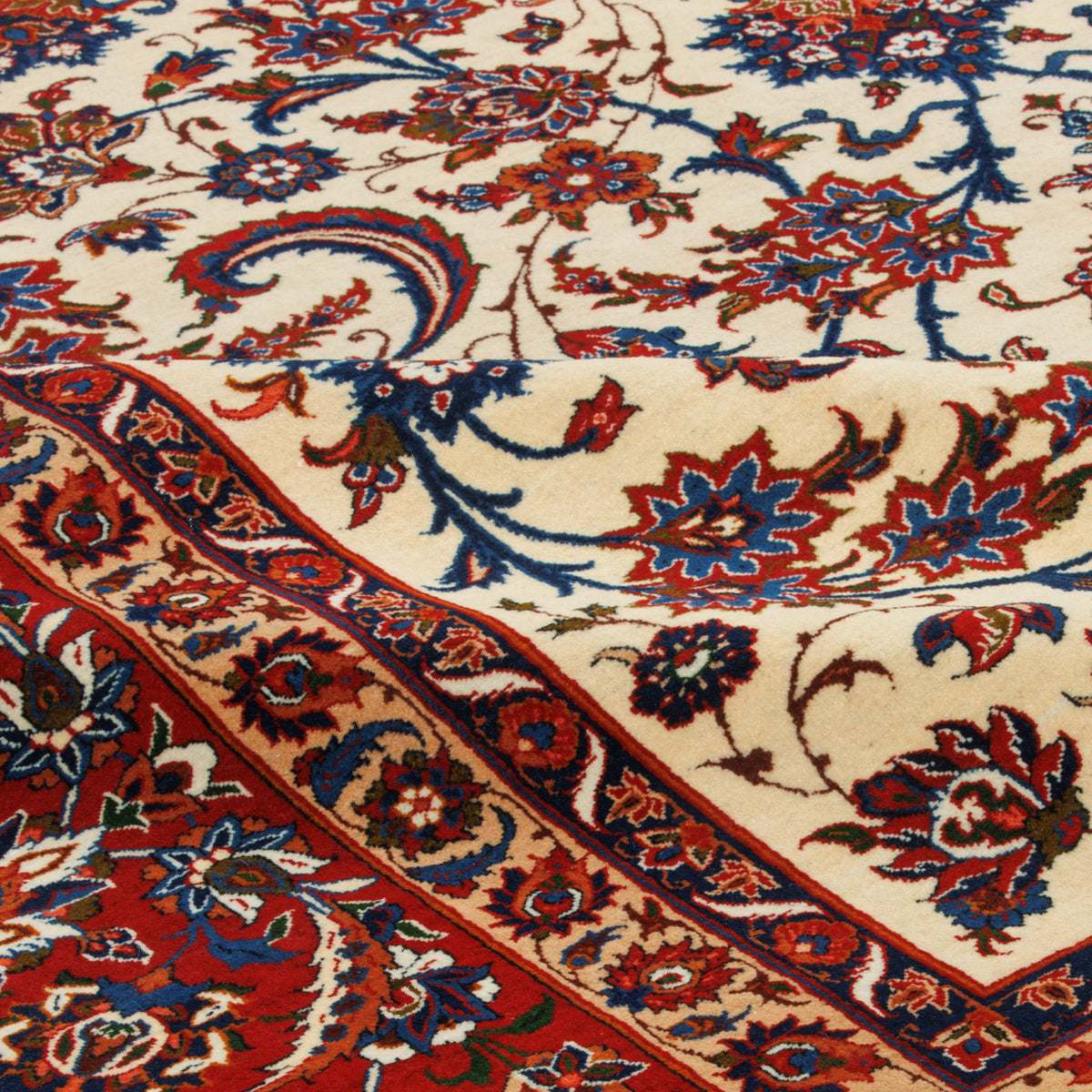
Many carpets are woven from a naqsh, a weaving chart on which each small square represents a knot and its colour. The weaver reads the chart row by row. Other carpets are developed through a traditional working method, where the design is carried in the weaver's memory and practice rather than drawn in full.
A repeat unit in a design is often called a vagireh. In an all-over design, the vagireh may be repeated many times across the field.
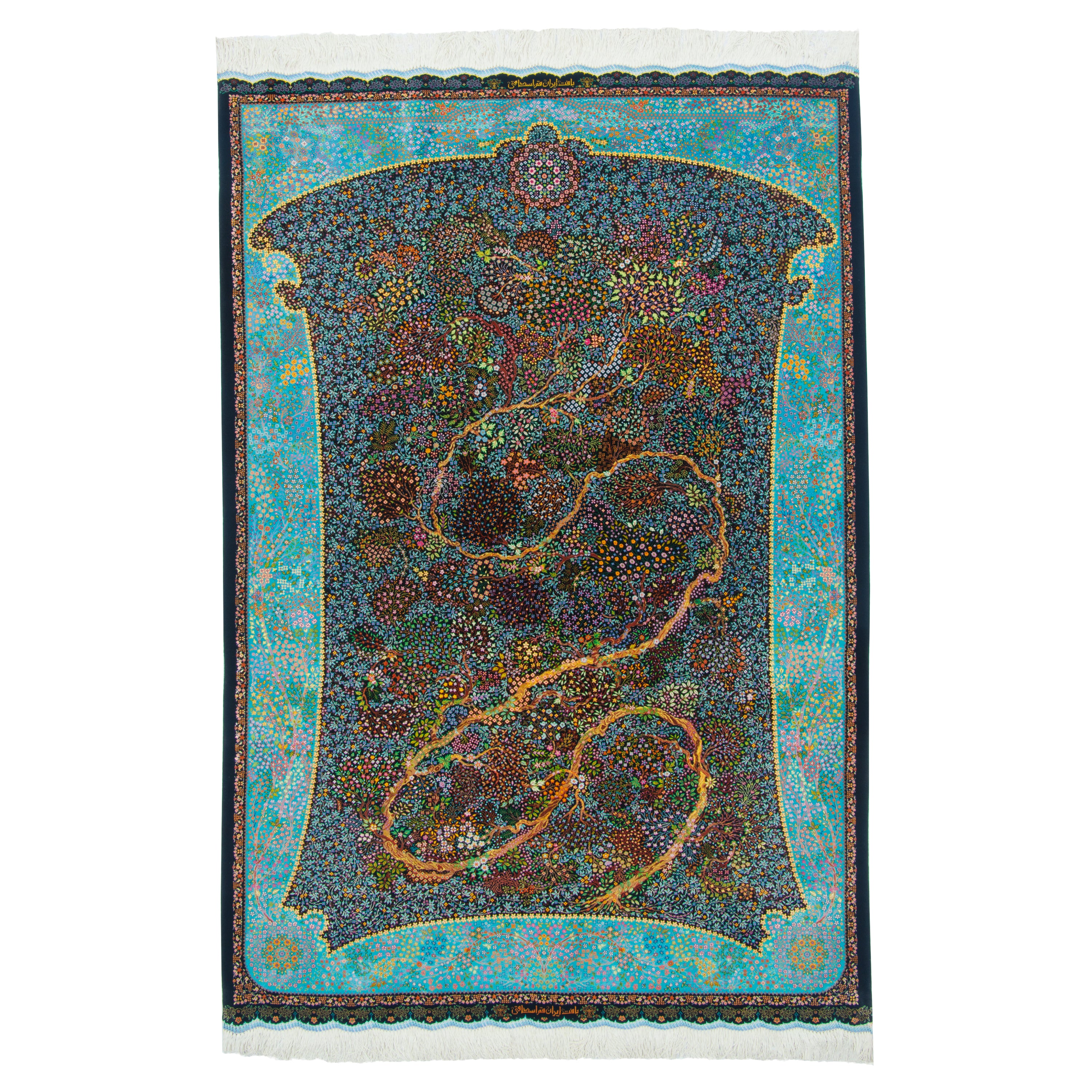
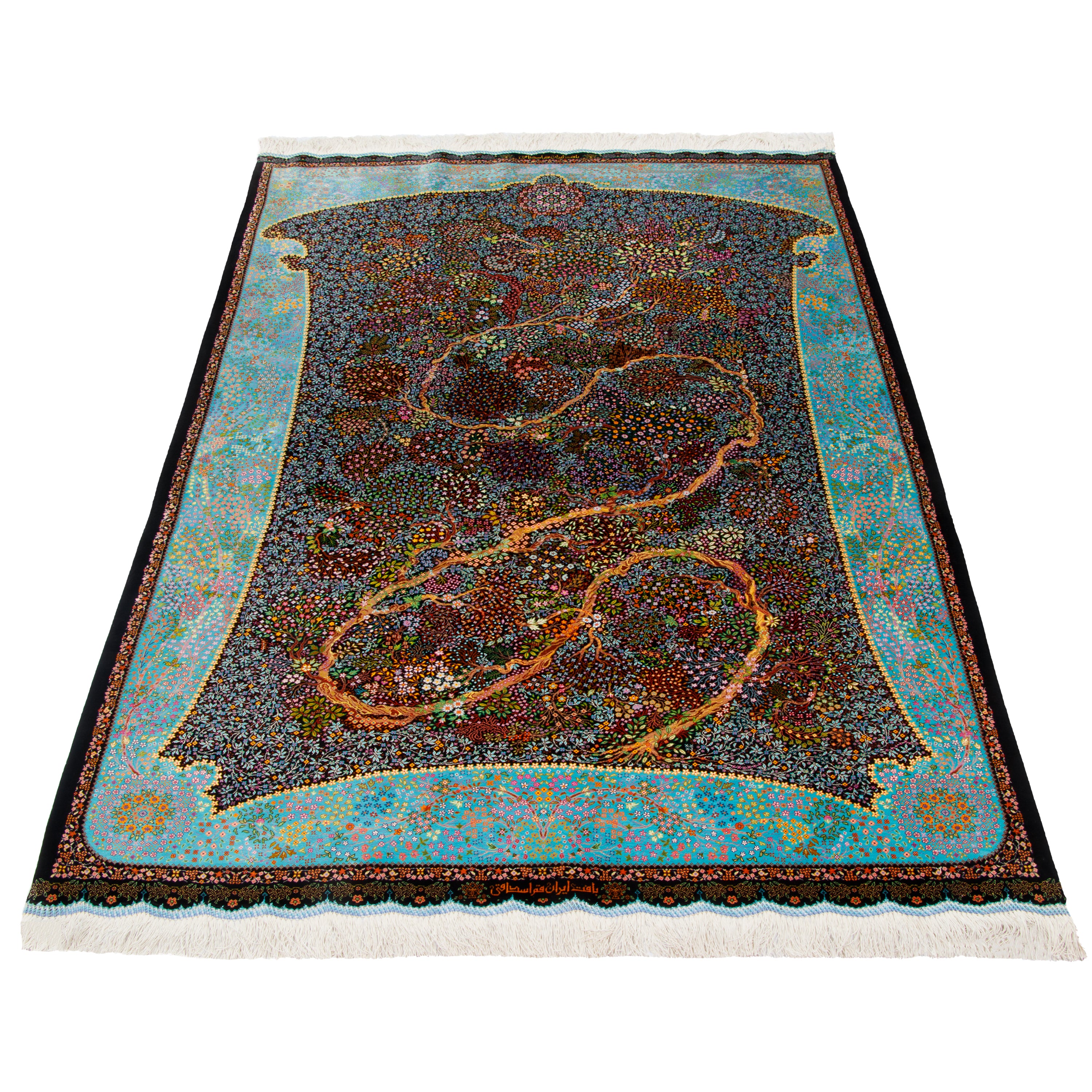
A complex chart demands constant colour changes and close attention, even when the carpet itself is modest in size. That is why a small portrait carpet can take as long as a much larger carpet with a simple field. Our article on what determines carpet price gives real weaving-time examples.
Persian knot vs Turkish knot
There are two main knot structures in hand-knotted carpets:
| Knot | Also called | Basic structure |
|---|---|---|
| Symmetrical knot | Turkish knot | The pile yarn wraps around two adjacent warps, and its two ends emerge between them. |
| Asymmetrical knot | Persian knot | The yarn fully encircles one warp and passes around the neighbouring warp differently, so the two ends do not emerge symmetrically. |
The popular names are misleading in one important way. "Persian knot" and "Turkish knot" describe structures. They are not a quality ranking, and they are not a complete map of national origin: both structures are found in carpets from Iran. You cannot identify a carpet's city, authenticity or quality from the name of the knot alone.
What knot density tells you
More closely spaced knots can support finer detail, which is why delicate floral work or figurative designs need a high density to be drawn well. In Persian carpets, density is usually expressed as raj, a count of knots along a line.
But density is one factor among many. Artistic design, drawing, colour balance, yarn, execution, condition and documented authorship all matter too. A higher density number does not automatically make one carpet the better purchase.
If you try counting knots yourself, be careful. Depending on the knot structure, more than one visible coloured segment on the back can belong to a single knot. Counting every dot as a separate knot gives a result that is too high. Ask someone experienced to show you one complete knot first.
A note on dyes
The yarn's colour is set before weaving begins. Natural dyes come from plants and animals: madder and indigo are familiar plant sources, while cochineal is insect-derived. A mordant helps certain colourants bind to the fibre. Synthetic dyes are manufactured colourants.
Neither "natural" nor "synthetic" alone tells you how well a carpet was dyed or how the colour will resist light and washing. Identifying dyes reliably can require records and specialist analysis. Our guide to carpet materials goes further into this.
Frequently asked questions
What is the difference between a Persian knot and a Turkish knot?
A Turkish, or symmetrical, knot wraps around two adjacent warps with both ends emerging between them. A Persian, or asymmetrical, knot fully encircles one warp and passes around the neighbouring warp differently. The names describe structures, not quality.
Are all Persian carpets woven with the Persian knot?
No. Both knot structures are found in carpets from Iran. The knot name alone cannot identify a carpet's city, authenticity or quality.
What is a naqsh in carpet weaving?
A naqsh is a weaving chart that guides the placement of colours, with each square usually representing one knot. Some carpets are woven from a chart; others through a traditional working method.
What is a vagireh?
A vagireh is a repeat unit of a carpet design. In an all-over design it may be repeated many times across the field.
Why does a small carpet sometimes take as long to weave as a large one?
Because weaving time depends on the design as much as the area. A complex chart with constant colour changes needs close attention at every row, even on a small carpet.
See the rows for yourself
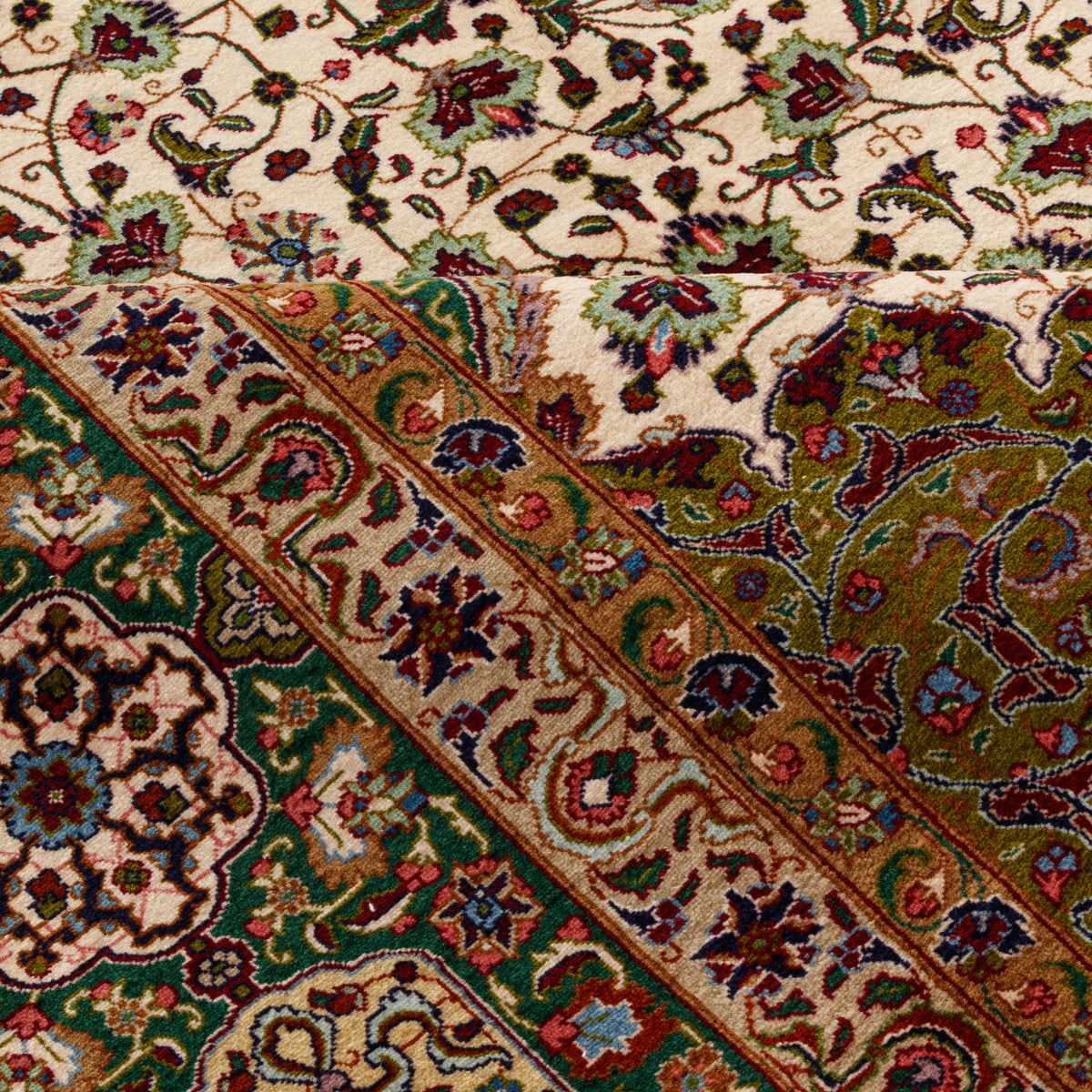
Turning a carpet over and seeing the rows of knots on the back is the fastest way to understand all of this. Ask us in the showroom and we will show you the knots, the weft and the chart logic on a real carpet.
- WhatsApp: +971 56 322 0485
- Showroom: +971 4 250 2123 — Al Barsha 2, Dubai
- Email: info@azimzadeh.ae
Azimzadeh — Persian carpets since 1969. Dubai showroom: Azimzadeh Carpet Trading LLC, Al Barsha 2. This article reflects the terminology our own sales team is trained on.
Related reading: what is raj · Persian carpet designs explained · browse handmade carpets